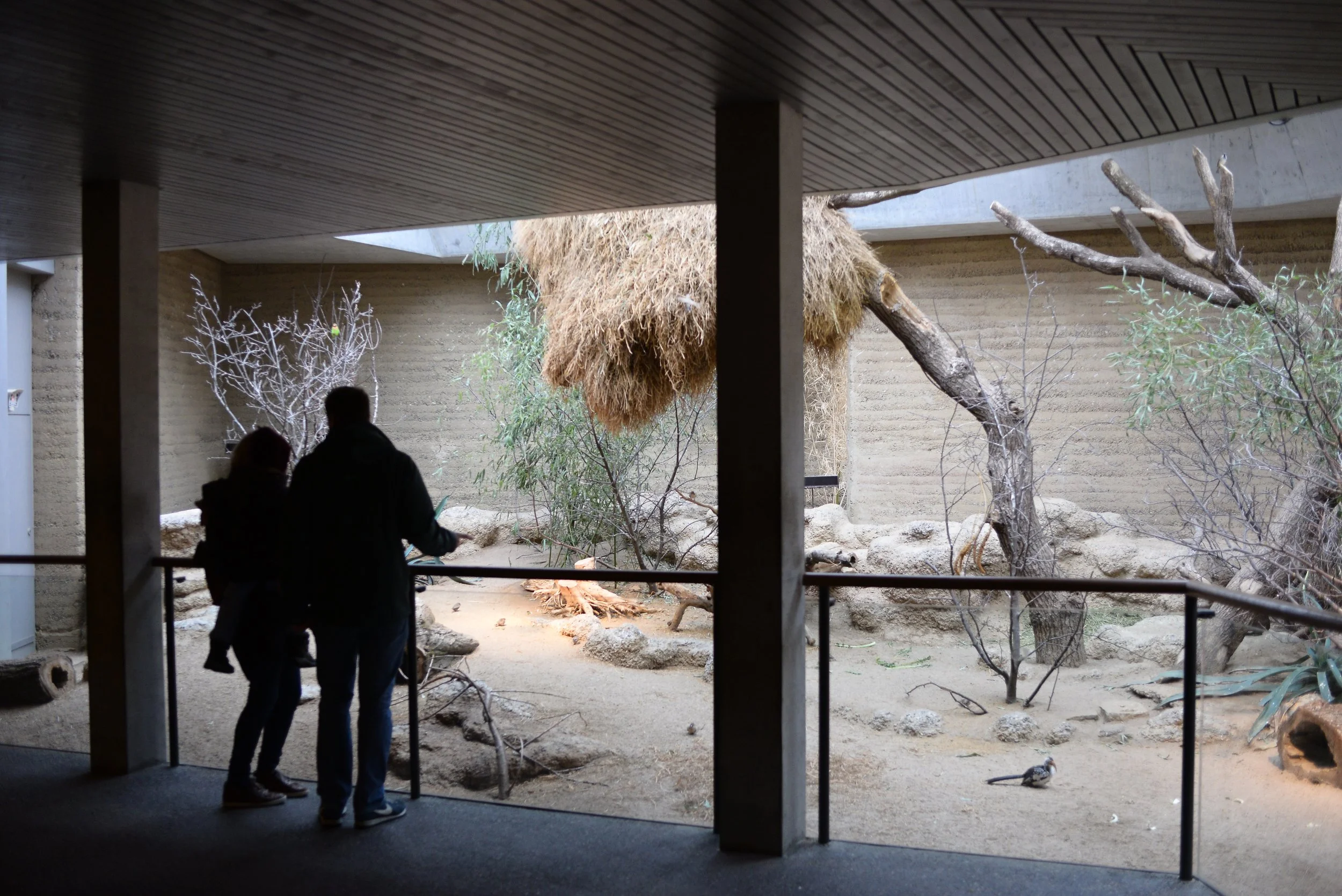
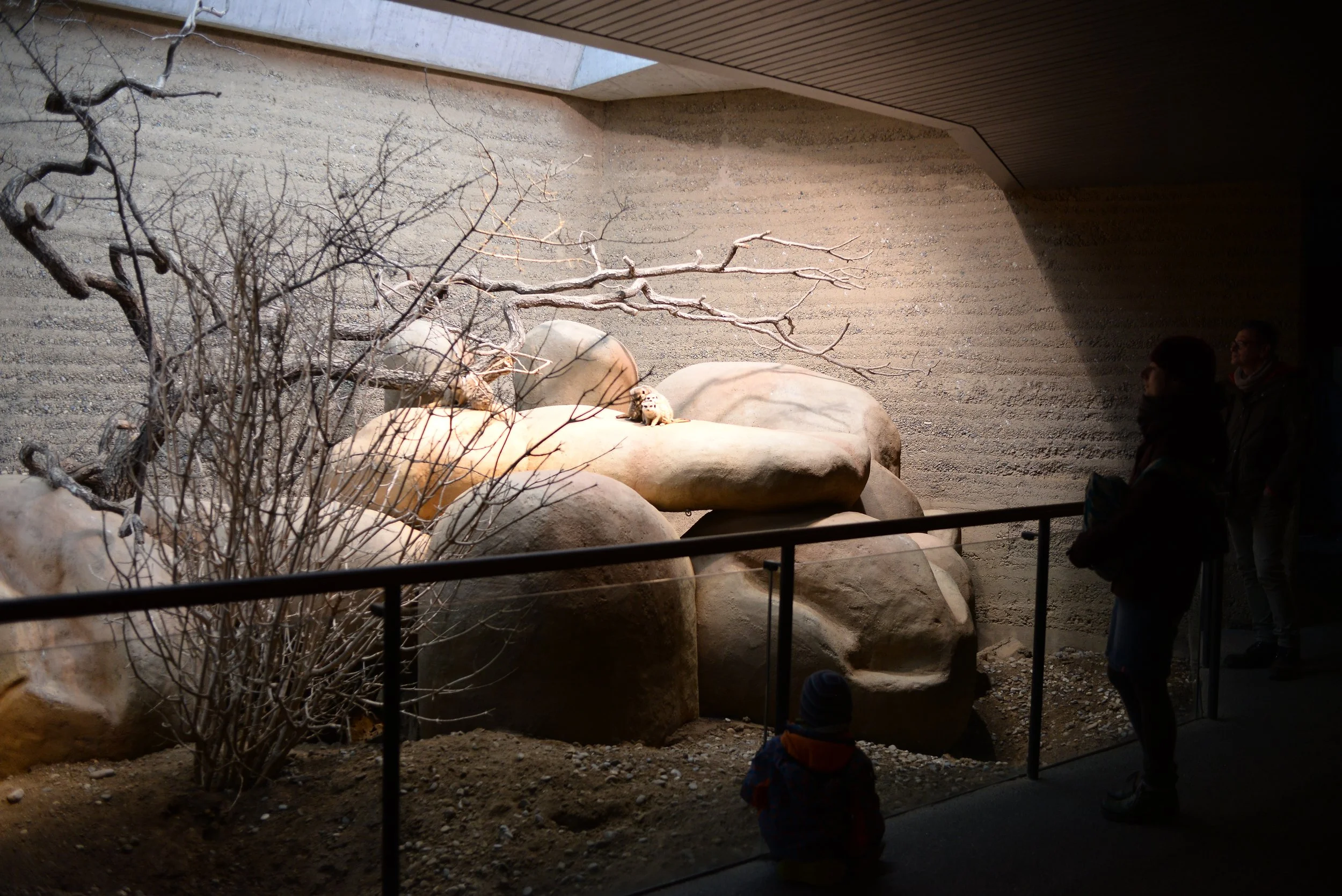
Etoscha-Anlage at the Zoo Basel in Switzerland, designed by architect Peter Stiner, features a unique combination of construction methods - rammed earth and steel frame with glass. The 70-centimeter-thick rammed earth walls provide a natural and calm ambiance while reflecting the durability of unreinforced rammed earth buildings. On the other hand, the steel frame and glass construction method creates a modern and transparent feel to the space. Overall, the design of the Etoscha-Anlage creates an organic and contemporary ambiance that is peaceful and engaging.
The theme "Etosha" originates from Namibia in southern Africa. Etosha National Park is one of the largest national parks in Africa, and the word "Etosha" means "land without water" in the local language. The Etoscha-Anlage opened in 2001 and offered an in-depth understanding of the ecology of the African savannah to the audience. At that time, it pioneered breaking away from the single-species display method and using the complete "ecological cycle" as the central concept of the display. The exhibit suggests that humans are a part of nature, and a variety of small animals represent the entire ecology of the Etoscha-Anlage.
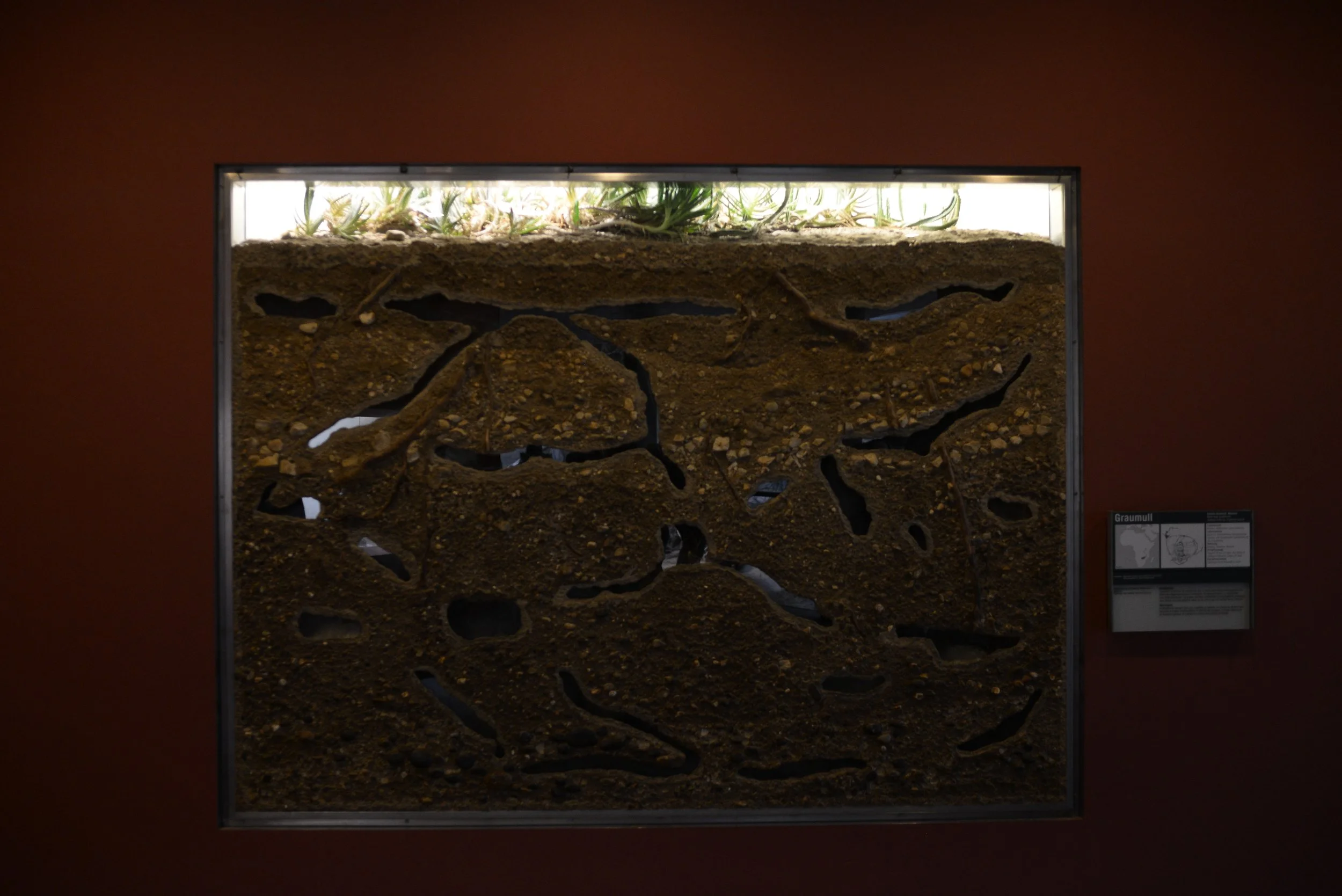
Basel Zoo is renowned for its exceptional animal exhibitions throughout the park. Each ecological scene comprises natural habitats, allowing animals to showcase their best postures to the audience. The curator carefully guides the visitors to focus on the issues they hope to convey. For instance, the museum's exhibition of Ansell's mole-rat (Fukomys anselli) presents a cross-section of this social animal's complex underground cave system through a glass frame. The walls are painted with colors that echo the local soil, making it visually more straightforward. The exposed soil surface and vegetation at the top make the narrative theme clear at a glance and draw the focus back to the ecological context, away from just the species.
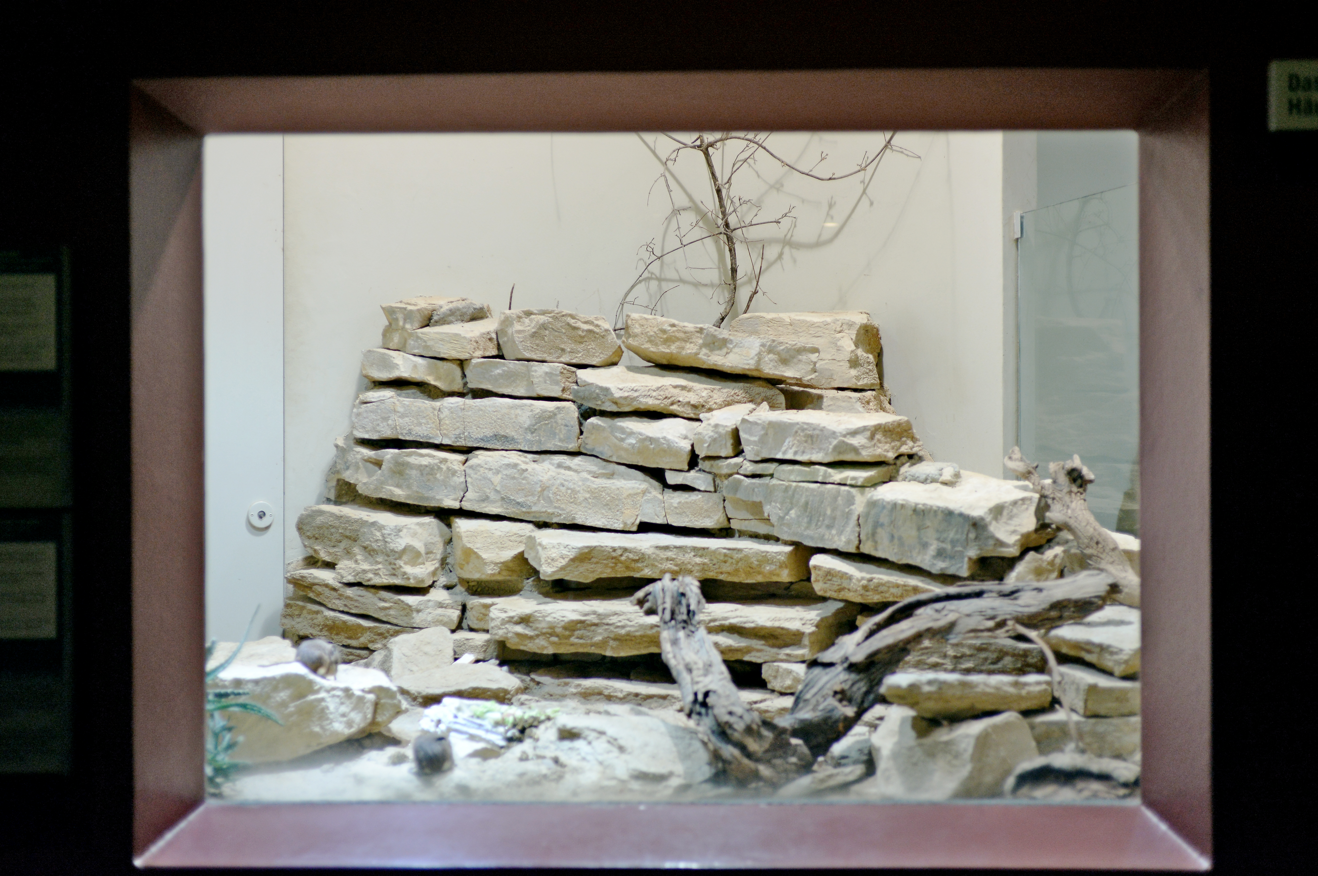
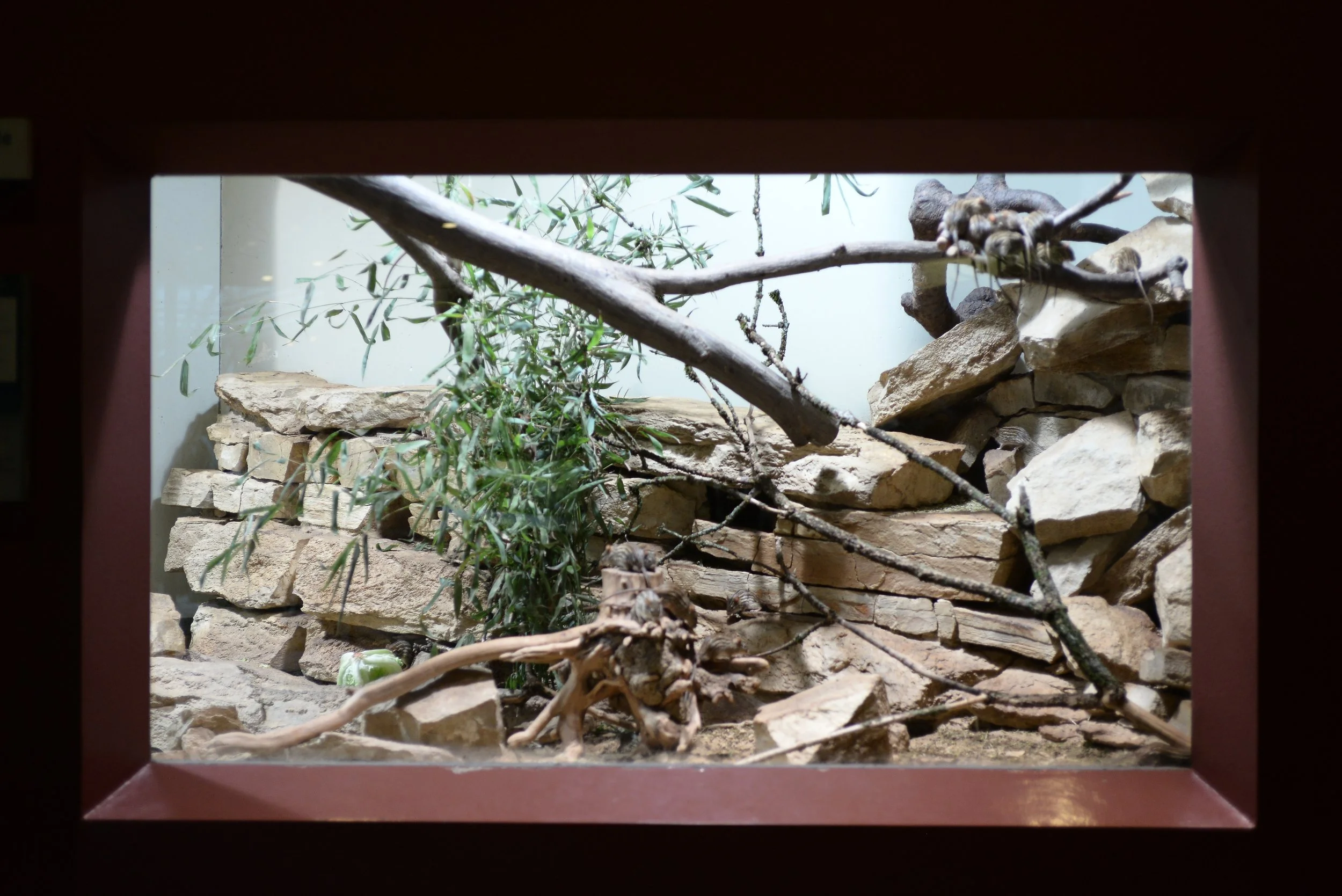
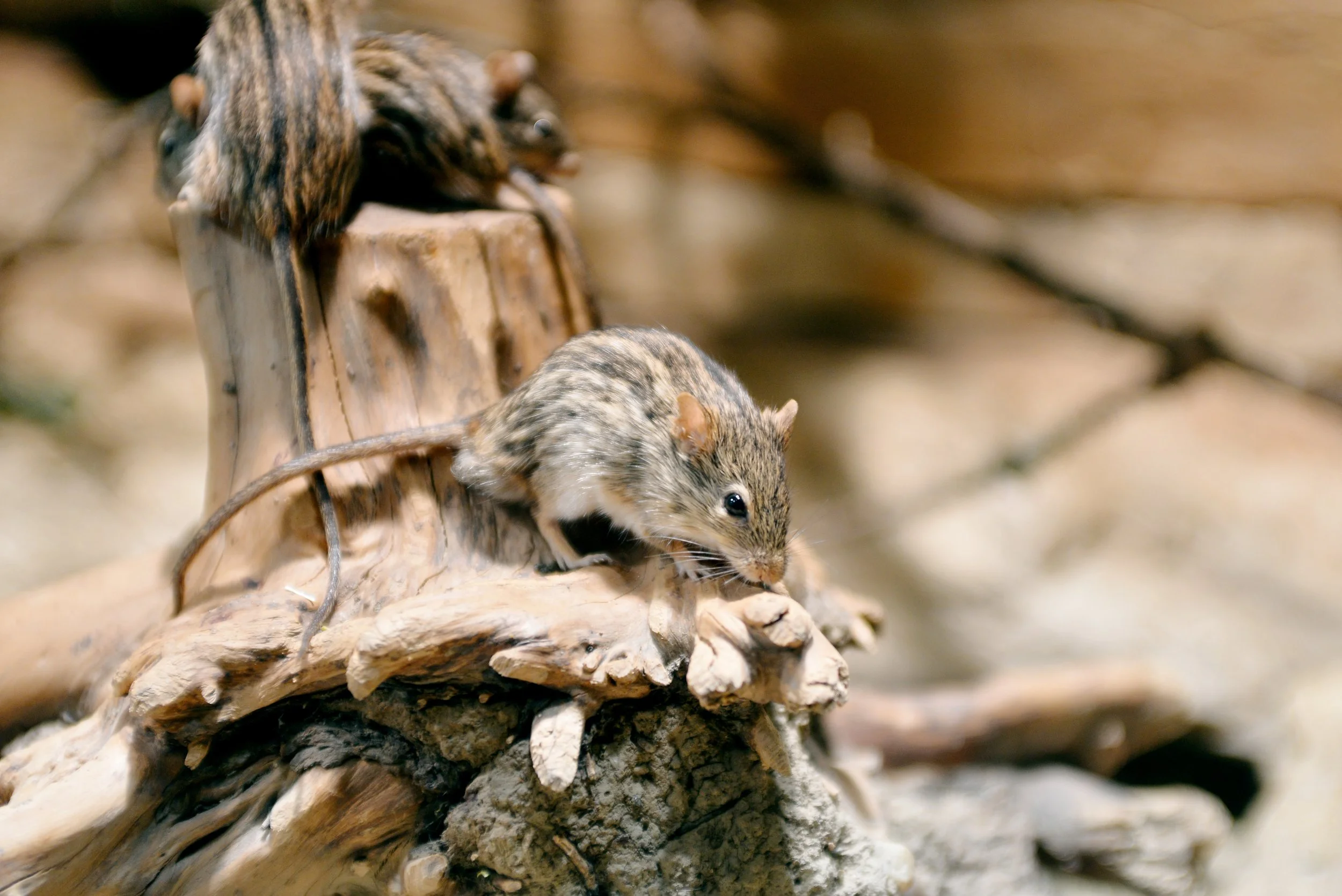
Some small animals, like the round-eared elephant shrew (Macroscelides proboscideus) and Barbary striped grass mouse (Lemniscomys barbarus), showcase their living environment through small ecological display windows. They use theater techniques and blank backgrounds to draw the audience's attention to the exquisite ecological landscaping and animal behavior.
One of the main exhibitions in the Etosha Pavilion features a mix of species, including rock hyraxes (Procavia capensis), South African ground squirrel (Geosciurus inauris), a group of sociable weaver (Philetairus socius), black-cheeked lovebird (Agapornis nigrigenis), and northern red-billed hornbill (Tockus erythrorhynchus). The exhibit is spacious, with delicate and lightweight metal railings and glass separating the animals from the visitors. The lighting in the exhibit area encourages the birds to stay within the space. On the visitor side, the exhibition hall creates a theatrical experience with a strong visual contrast between the bright animals and the dark environment.
As visitors walk along the slightly curved path, they can enjoy the scenery of Africa, with regular metal railings creating the effect of a continuous slide show of bright and dark lights. The gradient of the fences also blurs the boundaries, creating an immersive African atmosphere. The meerkats in the neighboring exhibit are also exhibited with the same techniques, with rock landscaping and heating equipment used to guide the animals into the best possible view for tourists.
The rammed earth wall in the polyculture space and the meerkat display is used as the background picture for the ecological landscaping, giving the impression that the space's boundary extends infinitely like a dune. The wall's natural texture, with its exquisite changes in layers and colors, creates a sense of eternity and movement that ripples with the light. This unique and independent space is a natural transition between the dark visitor side and the bright animal exhibit.