Memories in Hand: The Art of Zoo Ticket Design
By Casper Ho, Aug 2, 2024
Digital ticketing has taken over. You buy online, scan the QR code, and walk right in. It’s efficient, eco-friendly, and cost-effective.
Yet, I always choose a physical ticket when given the option. To me, a ticket isn't just an access pass—it’s the tangible anchor of a memory. Over the years, I’ve collected thousands of tickets and maps from zoos and aquariums worldwide, stacked them into binders, brought them to my first interview, and got the ticket into this industry.
Out of everything in a zoo, the ticket is the only physical touchpoint guaranteed to be held and kept by the guest. Interestingly, design intent varies wildly across institutions. Looking through my collection, I break them down into three categories:
Category 1: ‘‘A Micro-poster to Take Home’’
Zoo Miami (2023): Showcases their signature flamingo; all barcodes and legal disclaimers sit quietly on the back.
This is the gold standard for collectors. The front is dedicated purely to the guest experience—photography, or illustration, and the brand identity. The reverse handles functional necessities like QR codes and some must-knows.
By pushing operational needs to the back, the zoo deliberately steps back and treats the visitor as a true guest—making me feel seen, valued, and respected. It makes a lasting first impression and serves as a micro-poster you want to take home.
SMART AQUARIUM Shizuoka (2024): Brand storytelling upfront; info and stamp tucked behind. And the best paper texture I’ve ever touched.
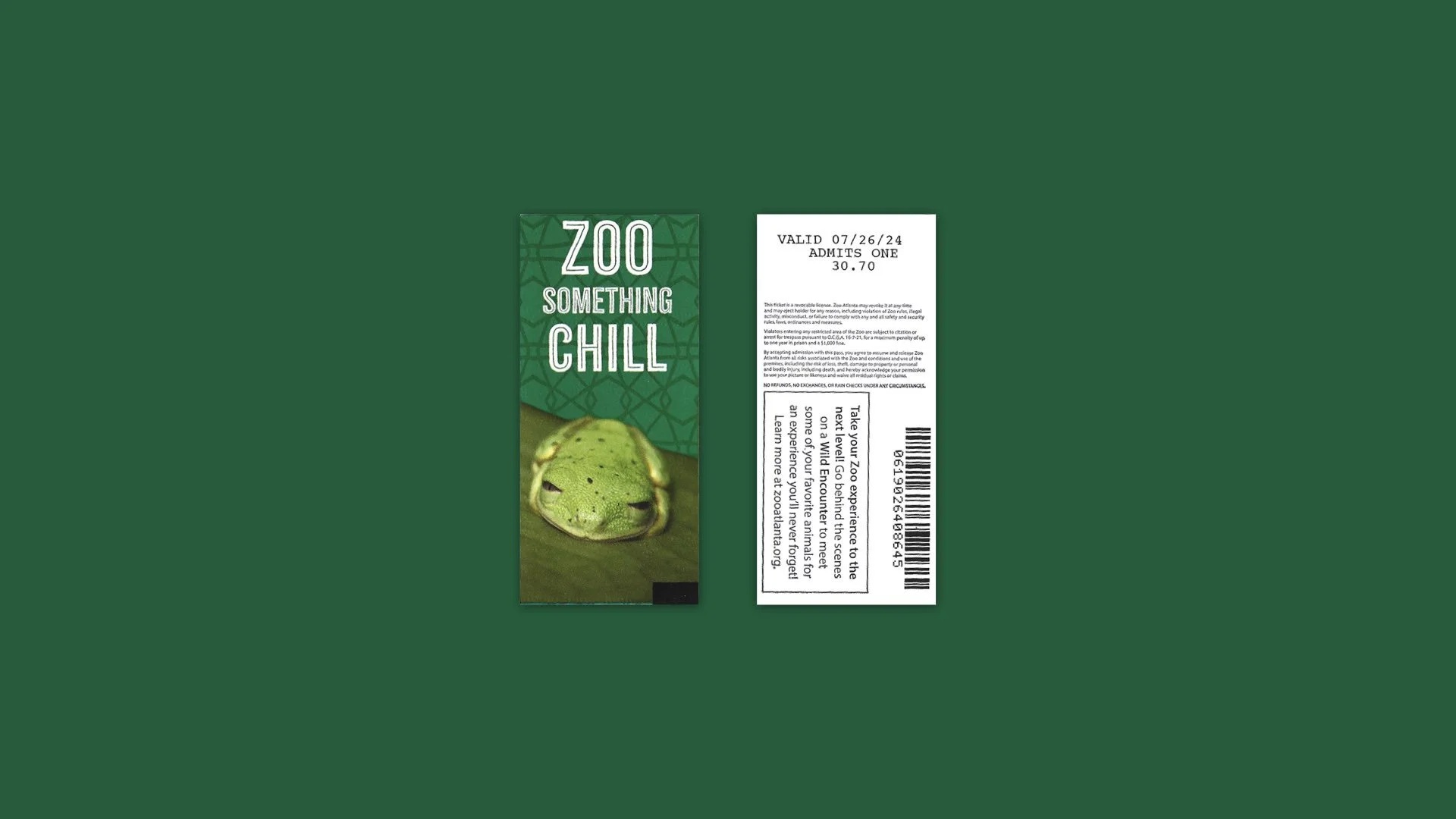
Zoo Atlanta (2024): Great brand personality on the front, barcodes behind. One note for the team: give the zoo some credit on the face—without a logo or name, I had to check my visit date to recall which park this belonged to (not even on the back)!
Category 2: ‘‘When Function Crowds the Form’’
The Florida Aquarium (2024): Photograph and a giant QR code share the same visual weight.
These tickets still hold souvenir value, but they cram both aesthetic and operational elements onto the same face. Sometimes it works—like Ueno Zoo’s retro date stamp.
The moment it scans at the entry, a barcode becomes dead space to the guest. Elevating operational logistics to the same visual weight as the animal imagery feels like weakening the storytelling strength.
Ueno Zoo (2024): A classic layout used for decades. The stamped date right next to the animal photo adds nostalgic charm.
Ripley’s Aquarium of the Smokies (2023)
Category 3: ‘‘An Afterthought with a Logo’’
Philadelphia Zoo (2024)
These fall into an awkward middle ground: technically, they are branded, and designed by someone, but visually barren.
The design core may be the same as Category 2, but for the guests, these tickets feel like little more than paper receipts with a logo slapped on as an afterthought—offering little emotional payoff and even less collectible value.
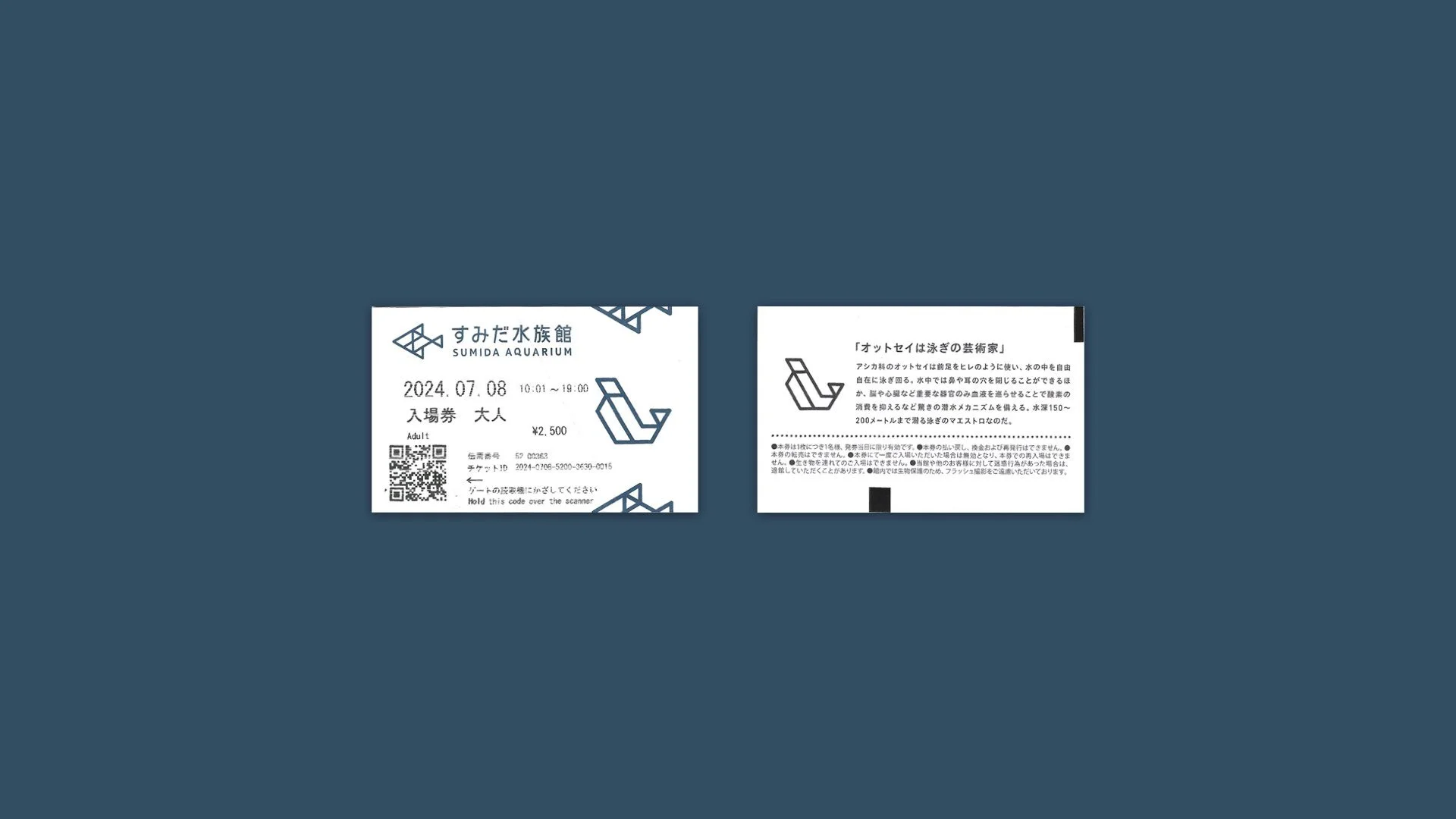
Sumida Aquarium (2024): Features sleek geometric identity icons, yet still constrained by a standard receipt-like layout.
‘‘The Receipts’’
Georgia Aquarium (2023): A $48 ticket to a world-class facility that feels like a queue ticket from the DMV.
Thermal paper receipts are the ultimate anti-souvenir. They wrinkle instantly, and fade into complete blanks over time.
I once pulled a completely blank slip from my binder, with shock, trying to recall where it came from. After an hour of racking my brain, I finally realized it was from Poland’s Opole Zoo. I loved the visit, but because there was no map and no durable ticket, that memory was almost physically erased. Thermal paper serves frontline staff convenience, but it completely ignores the guest journey and the potential to bring guests back.
Cox Science Center and Aquarium (2023): Torn before I even entered.
Thank You for Hiring a Graphic Designer
Digital passes may rule efficiency, but well-designed physical ephemera is what keeps the magic alive on someone's desk or corkboard years later. When destinations treat even the smallest touchpoint with intentionality, they don't just validate entry—they anchor conservation and lifelong memories into the palm of a guest's hand.
I don’t know how many guests end up keeping their tickets, but I do know that every bit of intentional design we put in creates another reason for them to hold onto that memory. At least for me, a proud zoo nerd, I cherish every ticket—and the thoughtful graphic designer behind it.