Villa Formosas
Date & Location
Nov 2025 - Present
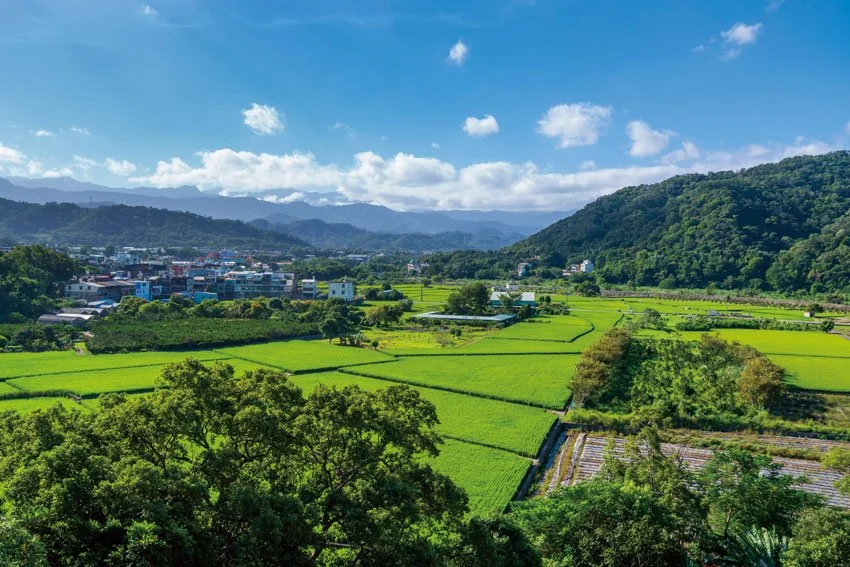
Guanxi, Taiwan
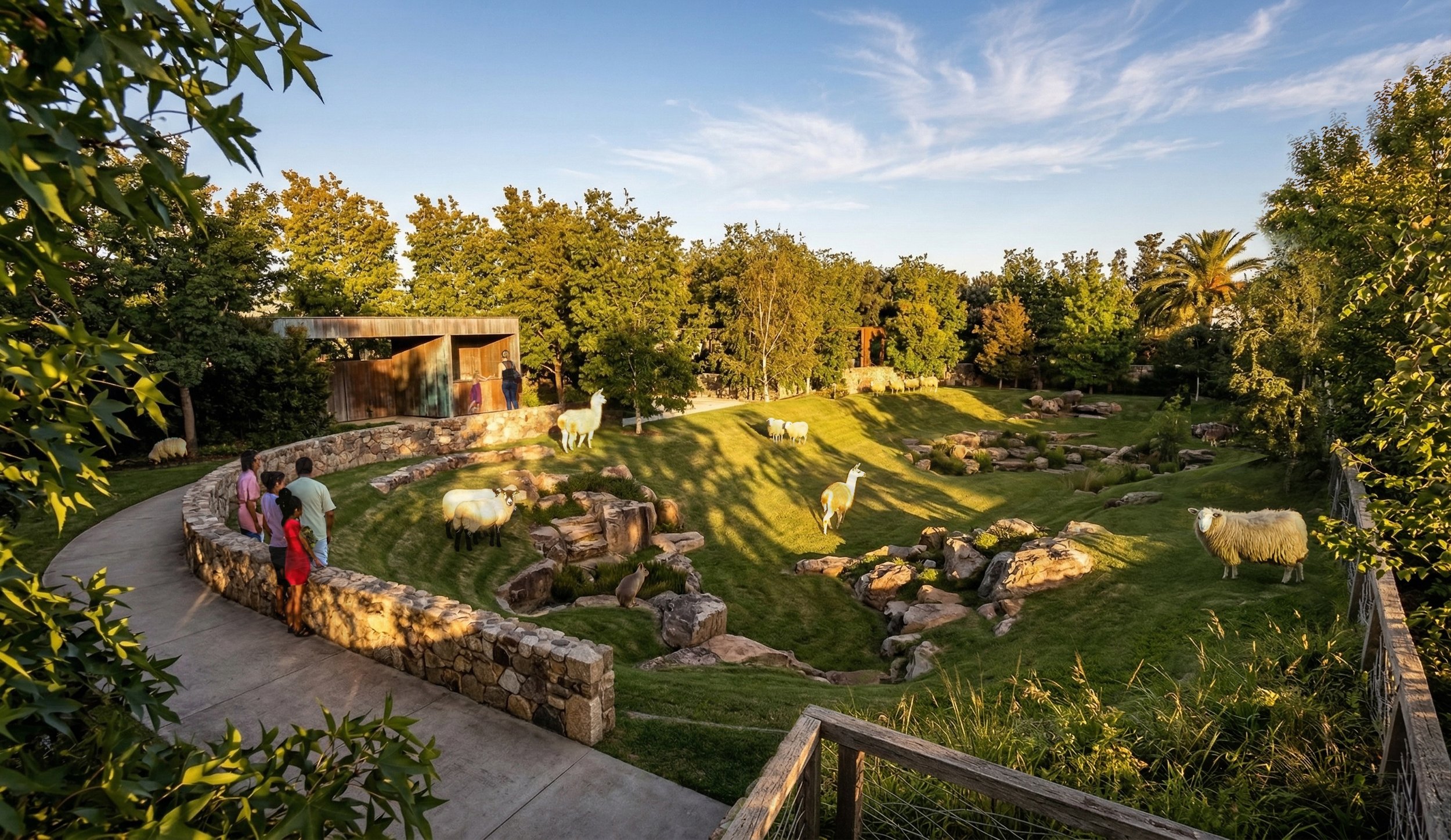
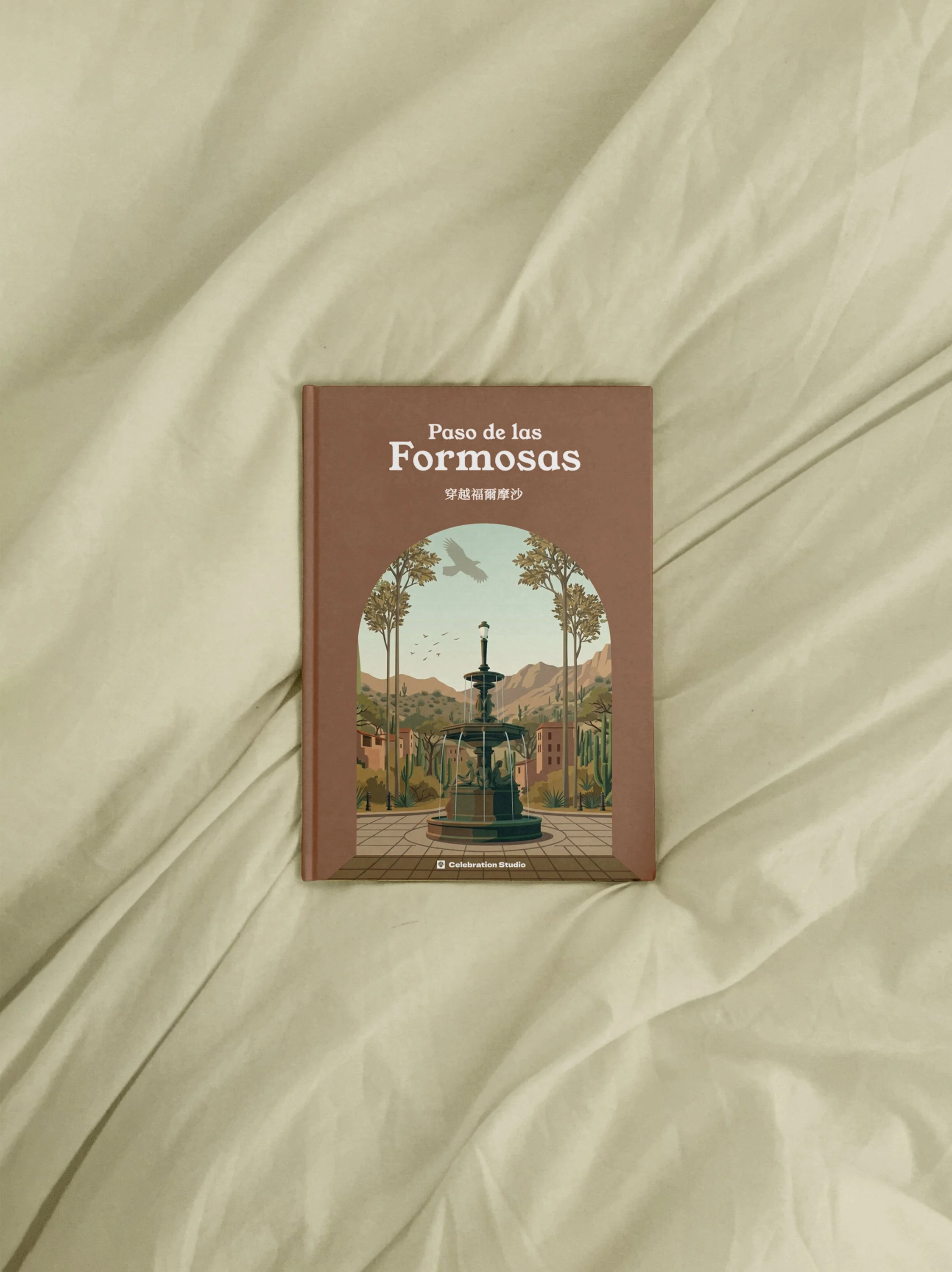
Paso de las Formosas
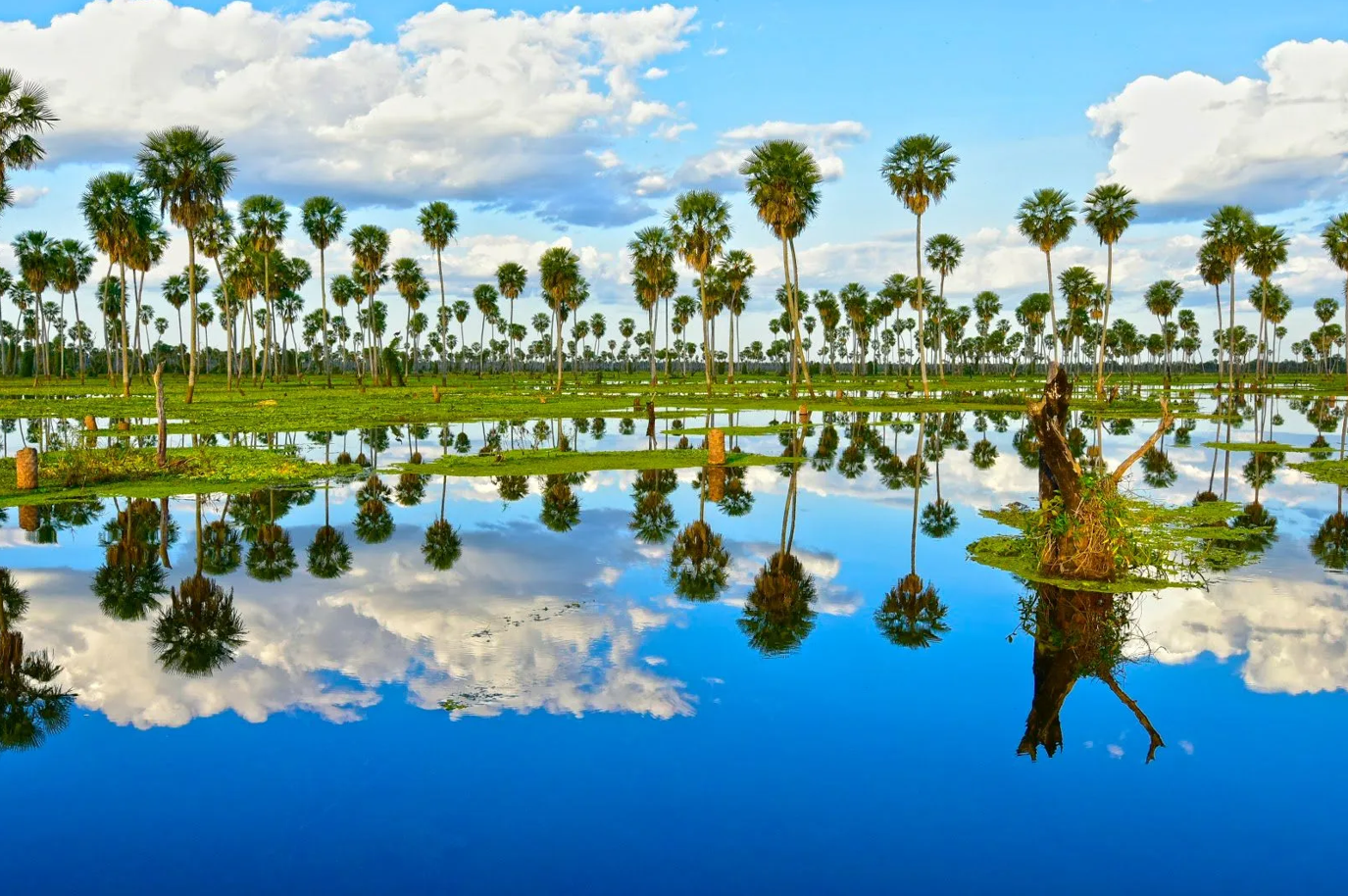
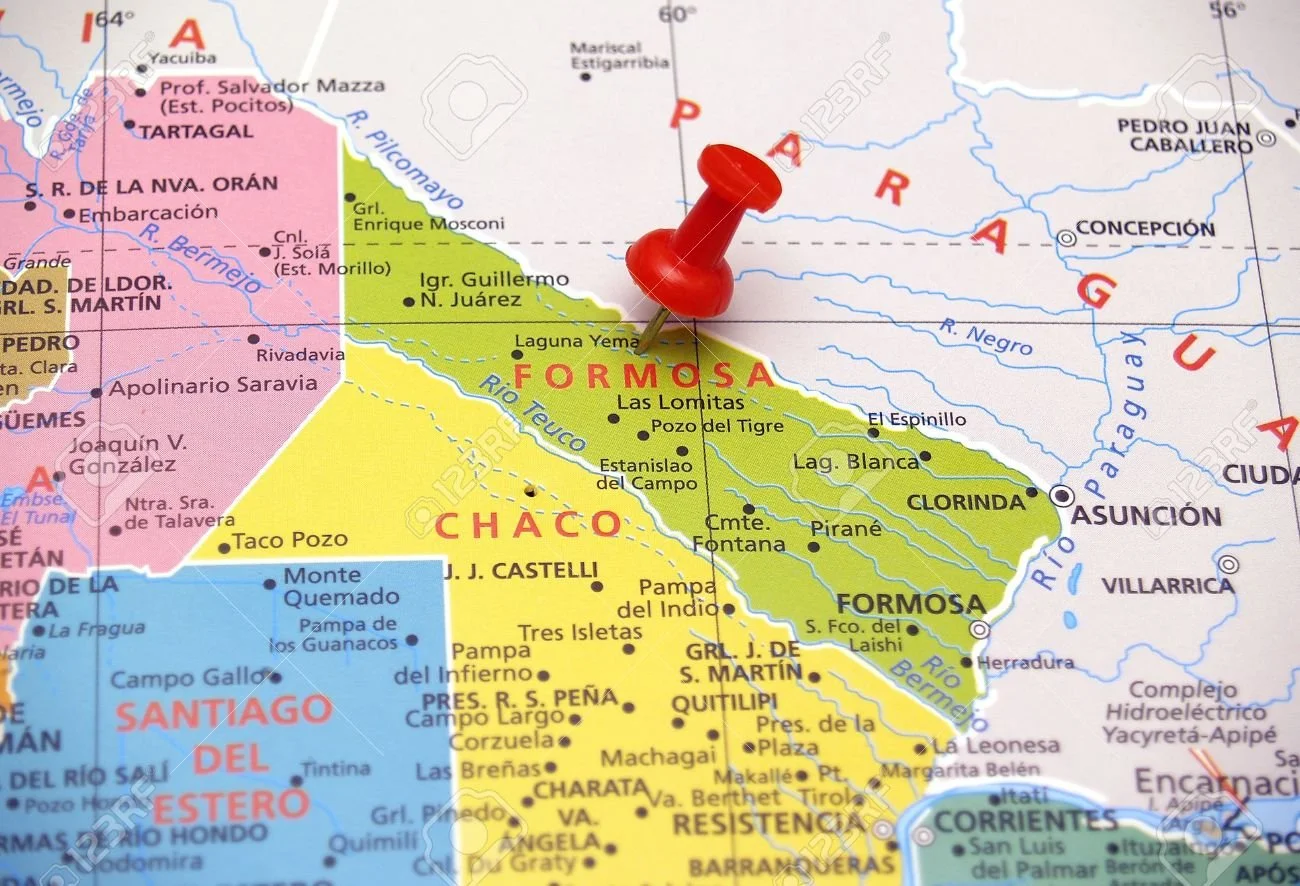
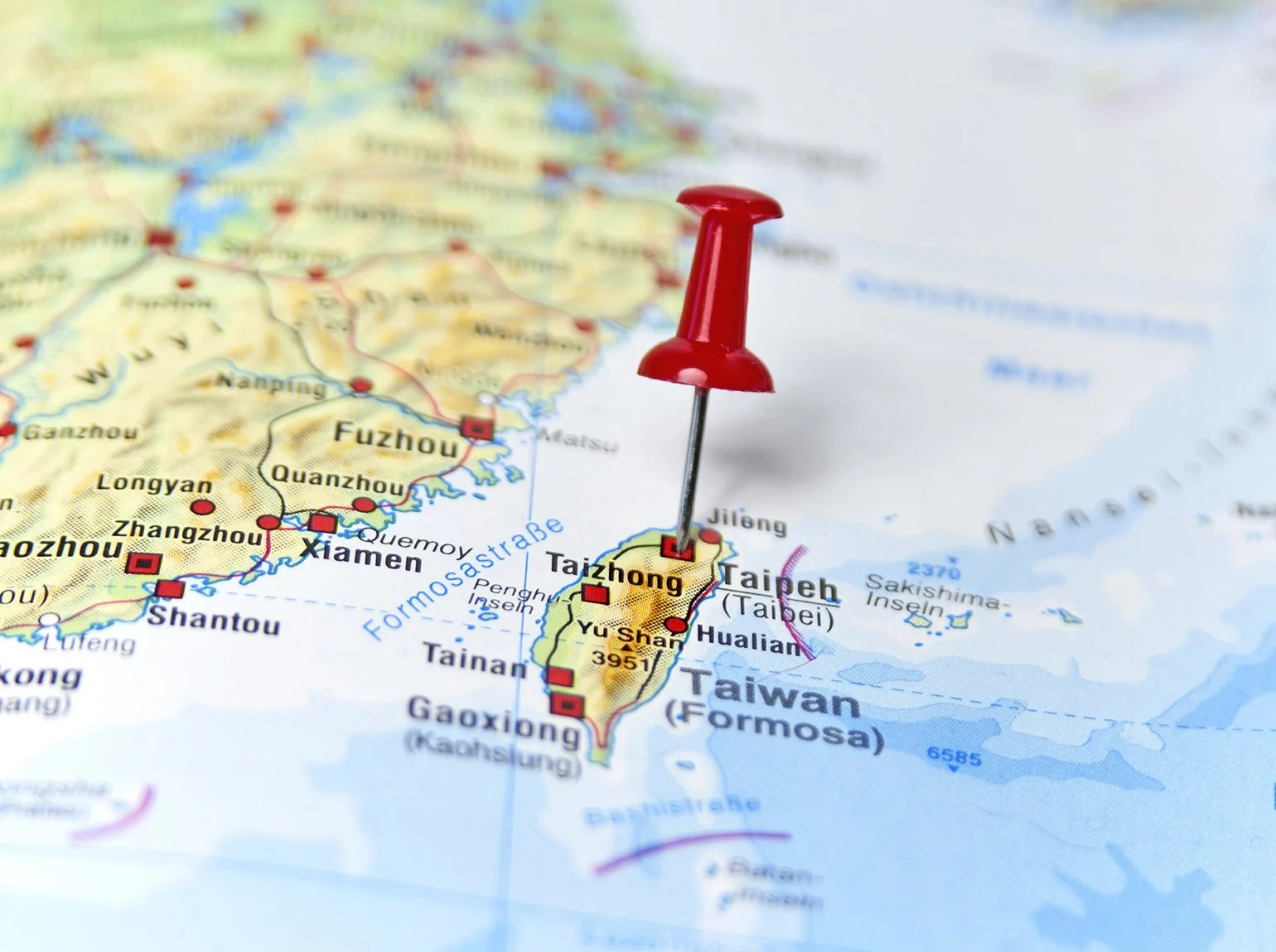
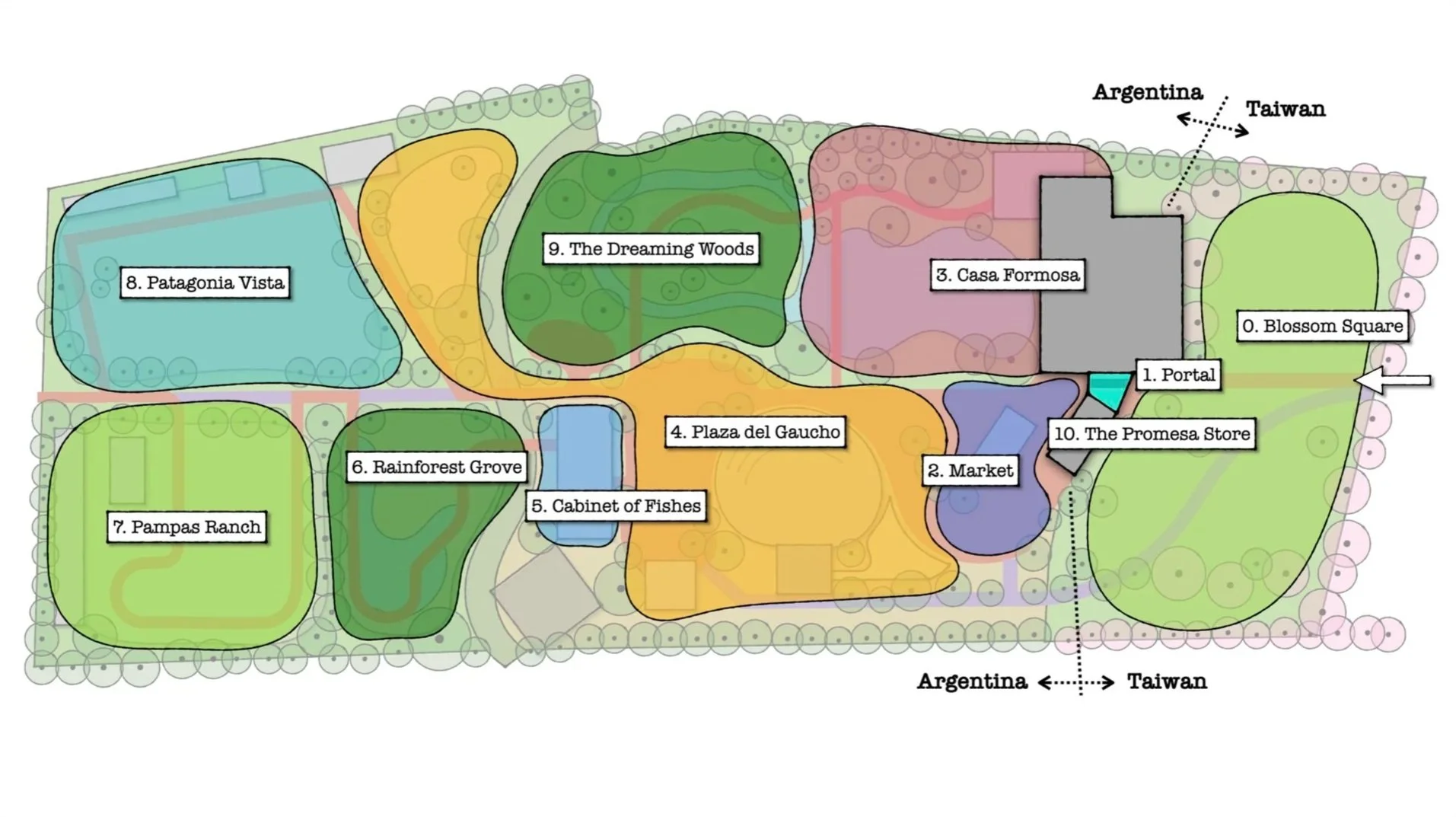
As the first flagship project of Celebration Studio, this 3-acre boutique zoo pioneers our "Storybook-Driven Zoo Design" methodology. The entire experience anchors on a geographical romance we uncovered: historical Taiwan was named "Formosa," and its exact antipode on the other side of the planet falls perfectly within the Formosa Province of Argentina.
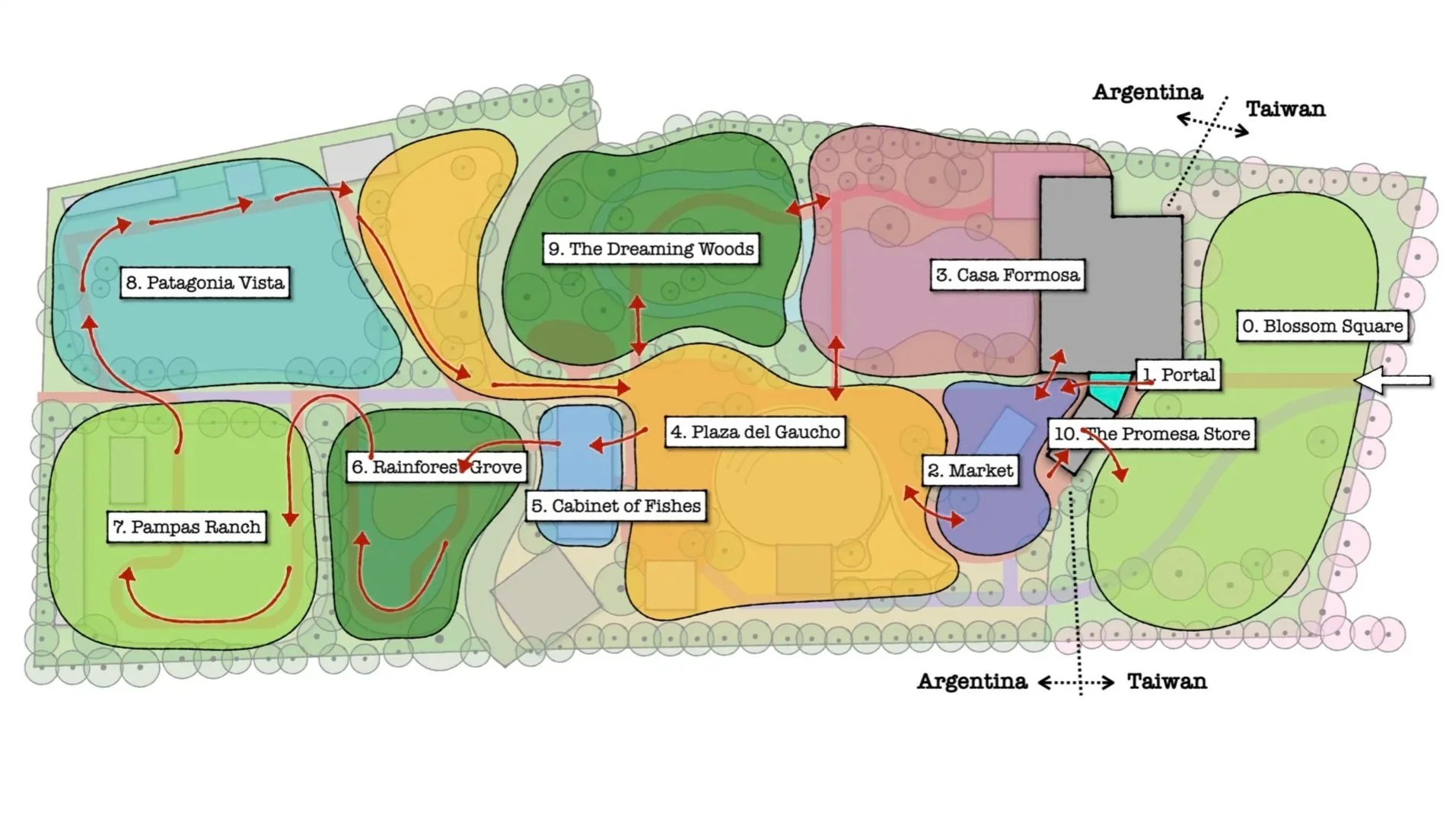
Bypassing traditional blueprints, my team and I authored the underlying script of this environment first—creating a portal where these two worlds collide, guests drop down from a Taiwanese tea farm straight into the South American wilderness. And we will publish this physical storybook before the zoo's opening, transforming guests into readers before they become visitors.
Project Type
Zoo Creative Direction
Client
Mr Fan
My Participation
Curation and visitors’ experience development.
Keywords
Zoo Design, Brand Strategy, Master Plan, Concept Design, Schematic Design, Taiwan, Argentina
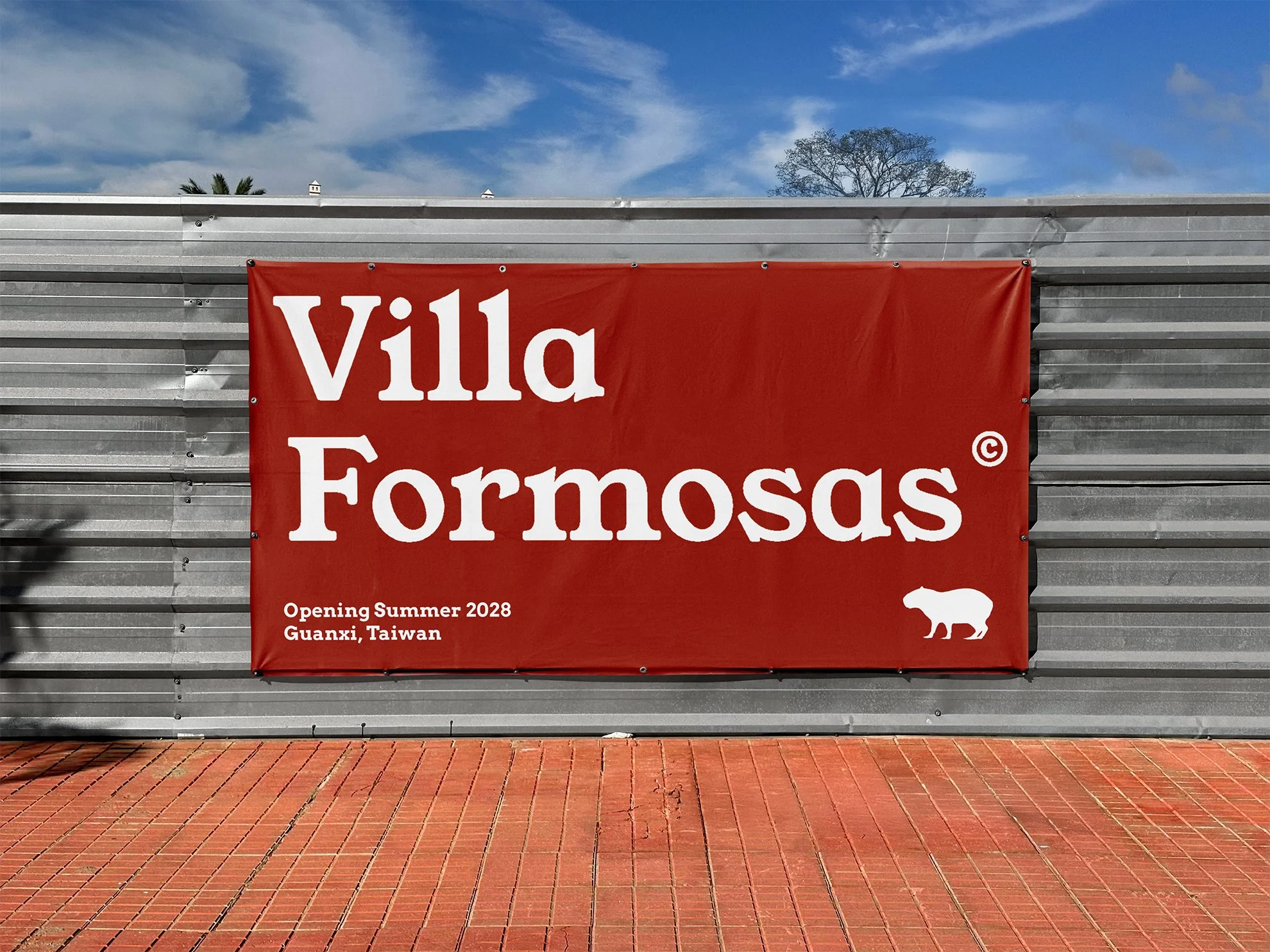
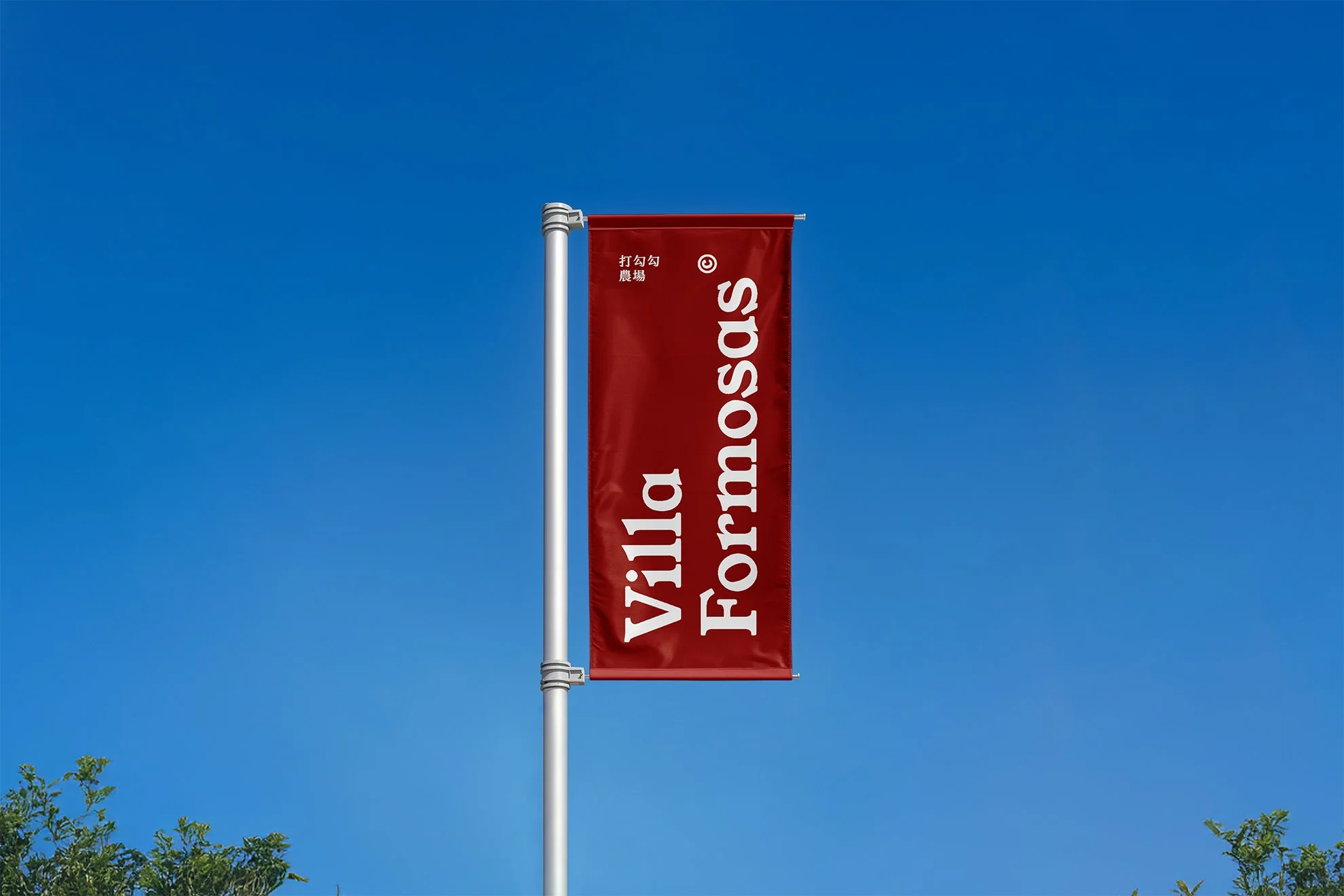
Brand Identity


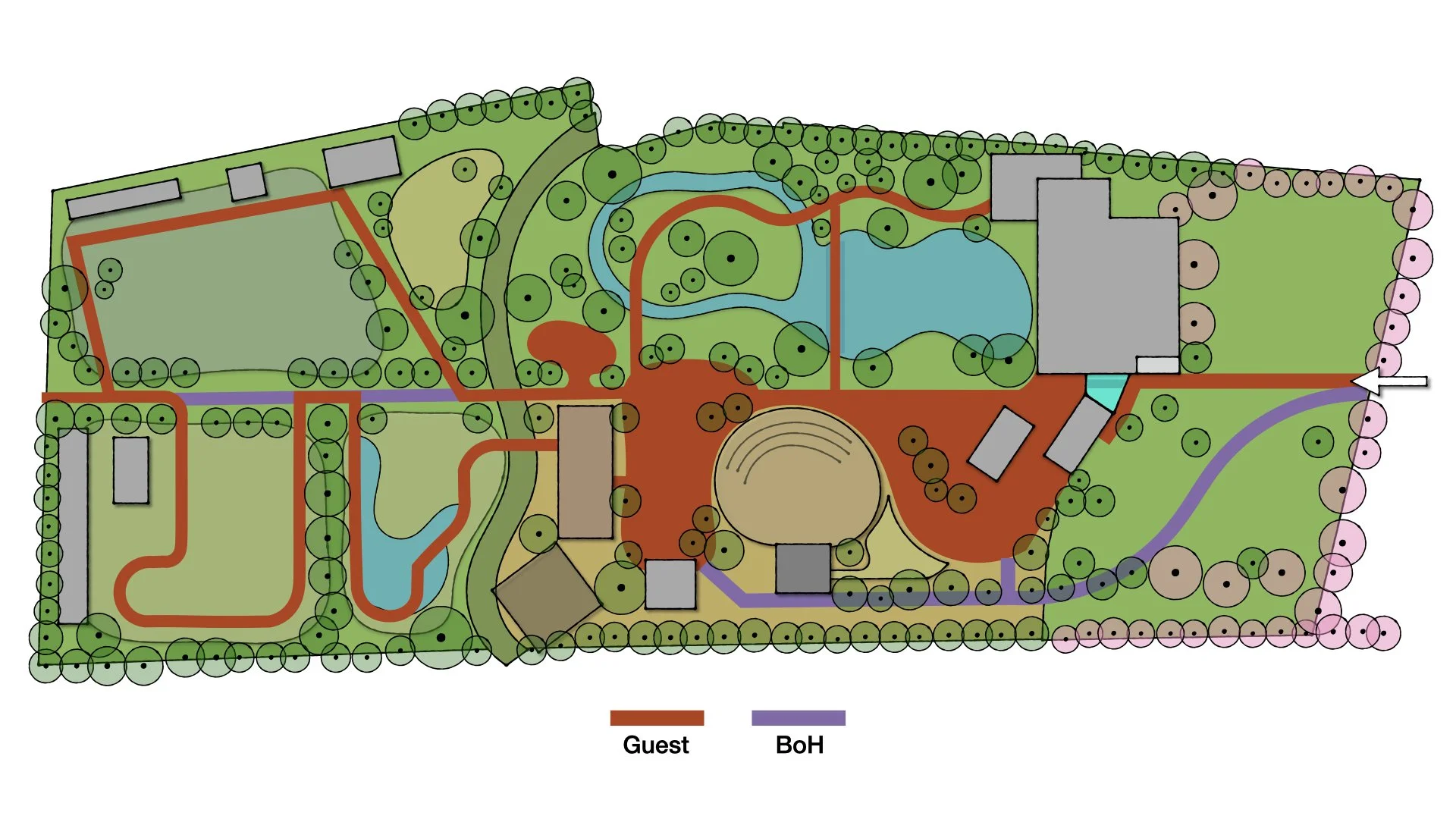
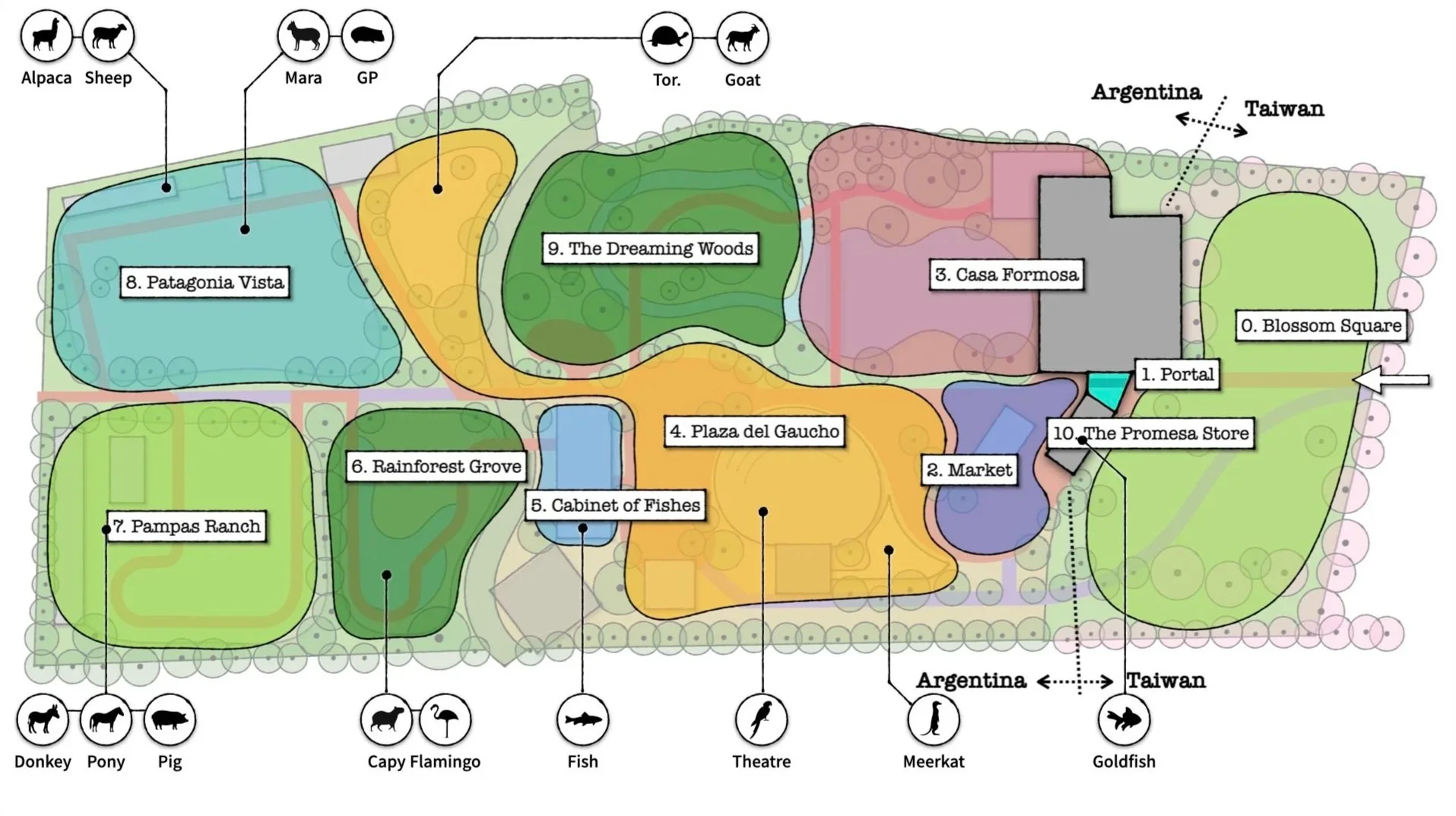
Site Plan
/ A Spatial Narrative from Taiwan to Argentina
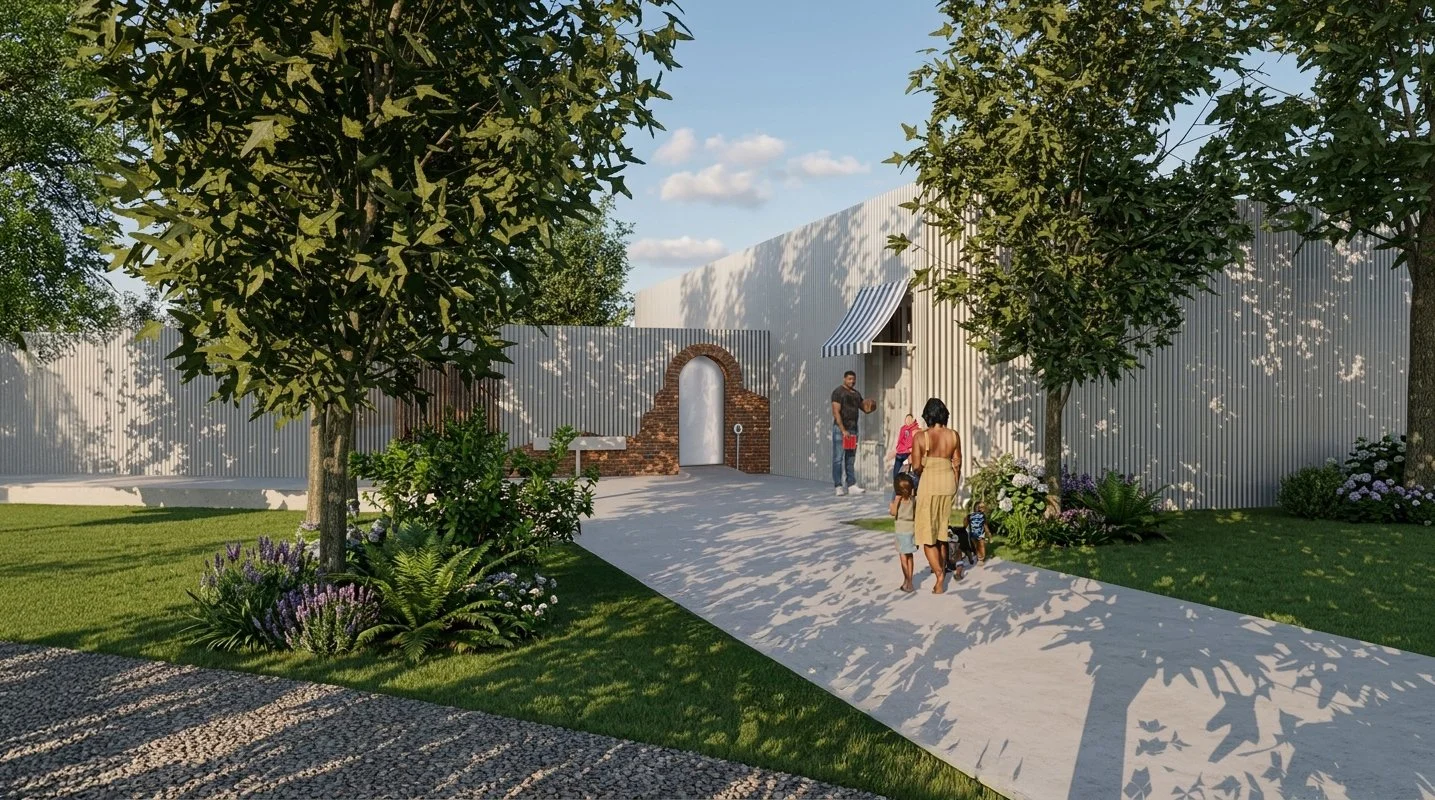
Sakura Garden
/ An Image of Everyday Taiwan
-
Visitors arrive through winding roads lined with tea fields, entering a quiet plaza shaded by trees and seasonal cherry blossoms. There are no grand entrances—only grass, wood benches, and the subtle rhythms of rural Taiwan. Children run freely, adults linger, and the scent of earth and tea fills the air.
Everything feels ordinary—intentionally so.
This carefully constructed normalcy grounds the experience, allowing the site to dissolve seamlessly into its surroundings. Yet beneath this calm surface lies something entirely unexpected: a spatial threshold, dormant for four centuries, hidden in plain sight.
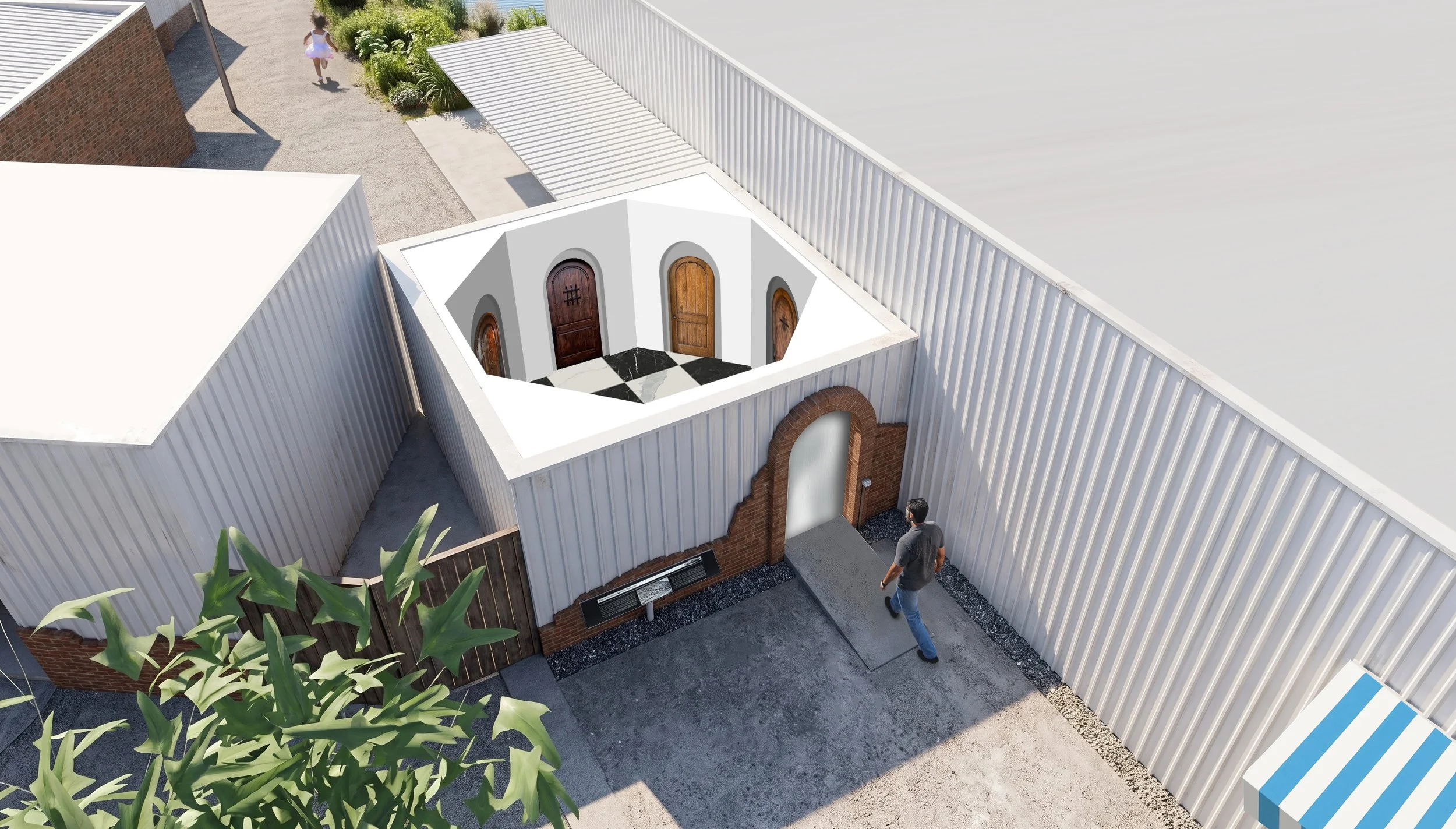
Portal of Passages
/ A Crossroads of Eight Doors
-
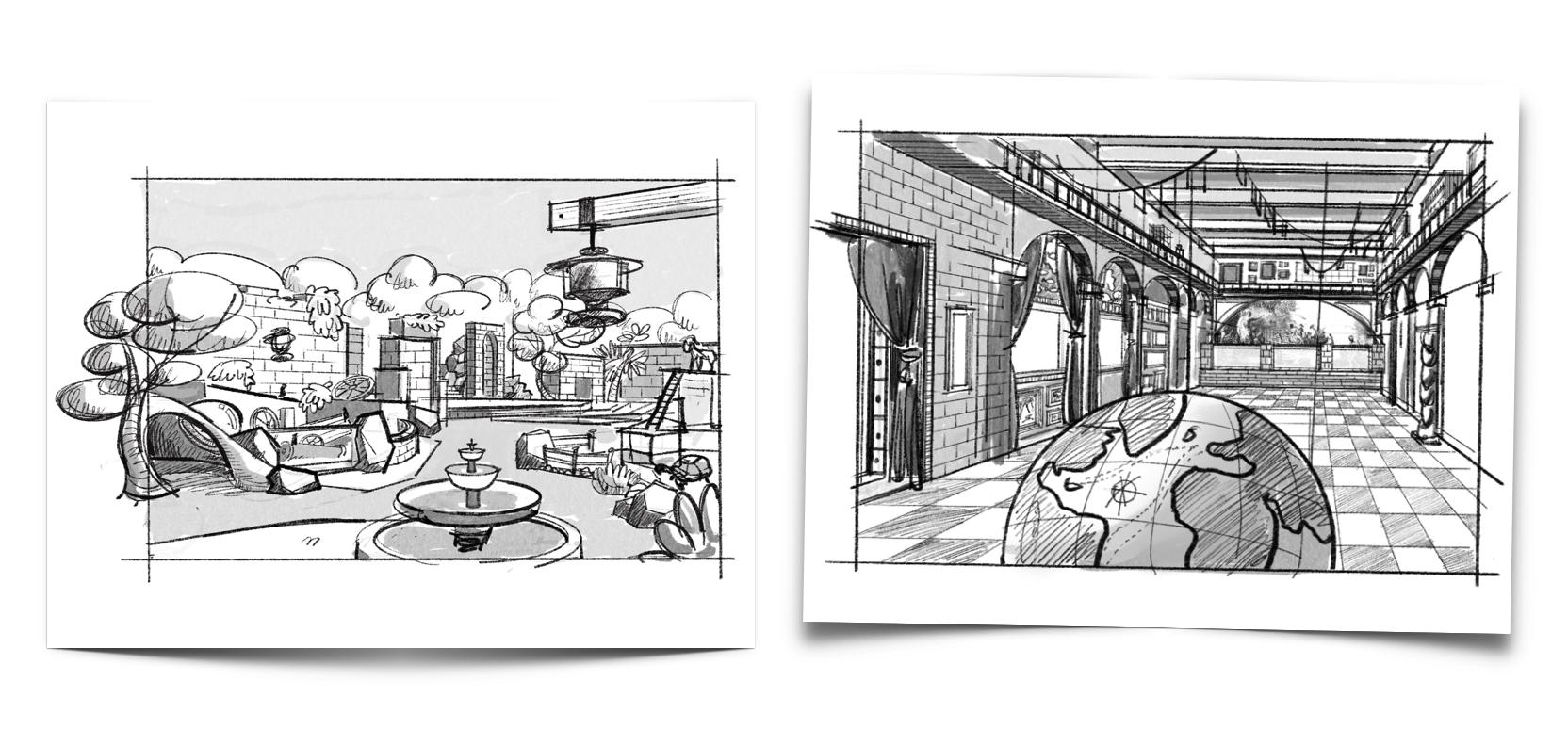
Step into a surreal chamber where the logic of the tea hills dissolves into a black-and-white checkered grid. Surrounded by eight distinct doors—each representing a different world—you have tumbled into a space where time holds its breath.
In this hall of curiosities, the rules of the looking-glass apply: though many portals tempt the eye, only one is "unlocked" for today’s expedition. As you try the handles, searching for the way through, you are no longer a visitor but a traveler at the threshold of the unknown. Only the gate to the Argentinian Formosa yields to your touch. With a single turn, the room vanishes, and the "Rabbit Hole" delivers you to a land once known by the same name.
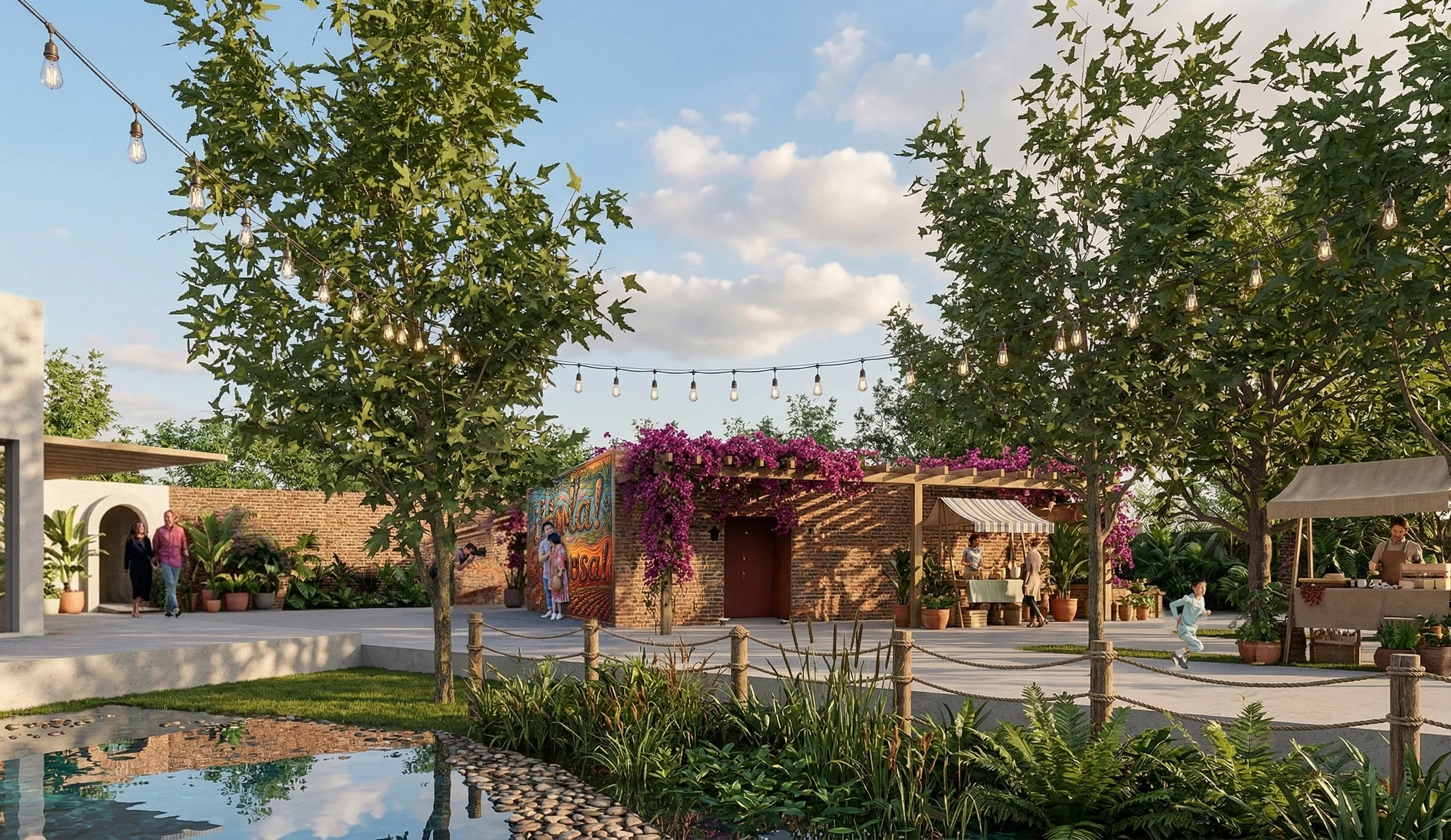
Feria
/ The Argentina Market
-
Visitors are no longer in Taiwan, the landscape shifts into a vibrant South American environment—where an open market merges with the atmosphere of an Argentine estancia. Stone, water, vegetation, and sound collide in a layered, sensory-rich space.
The contrast is deliberate and overwhelming. This moment reorients the visitor through emotion rather than explanation. Without signage or instruction, the environment makes a clear statement: you have crossed continents, arriving in another land once known by the same name—Formosa.
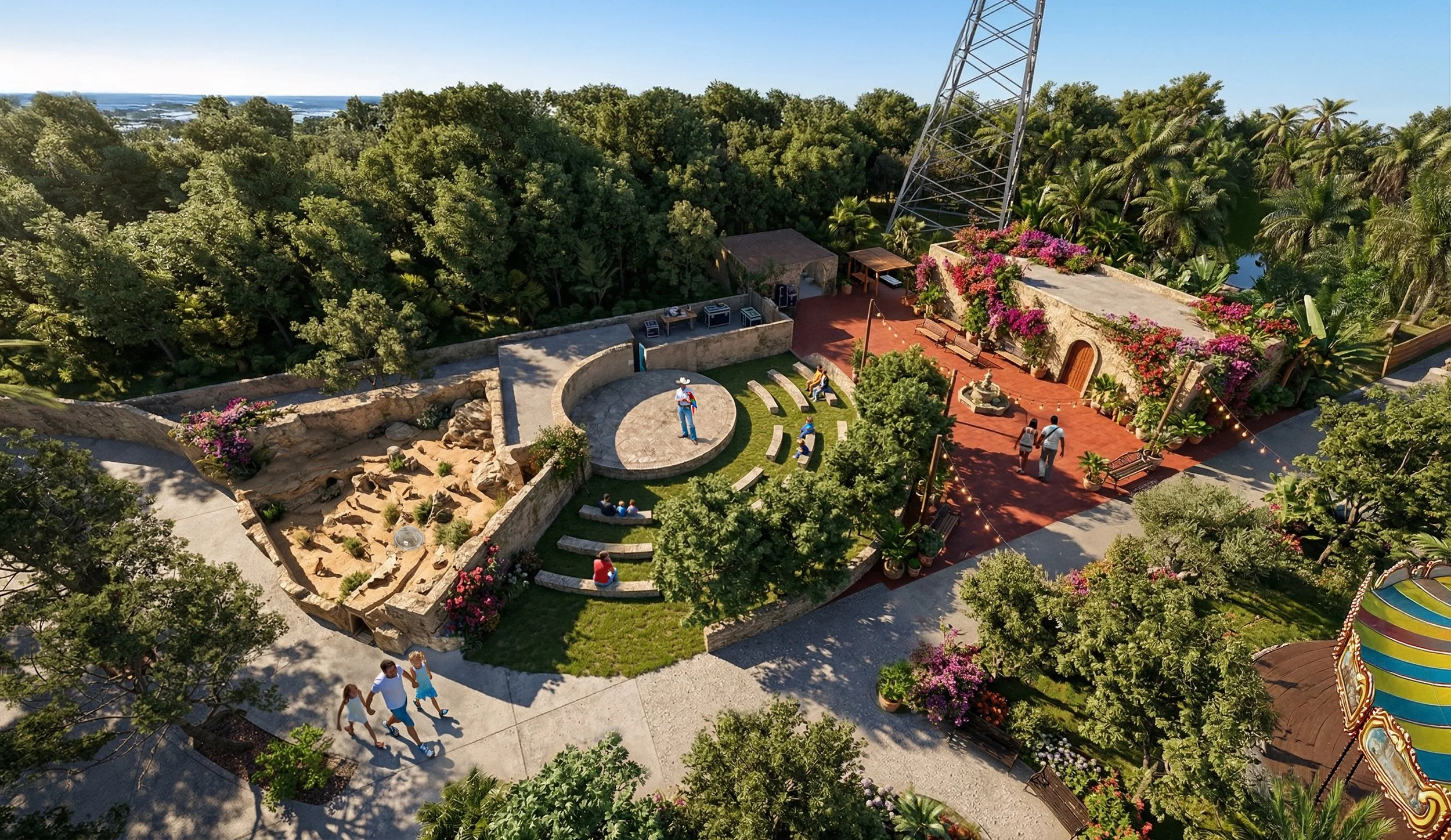
Gaucho Square
/ Traces of the First Explorers
-
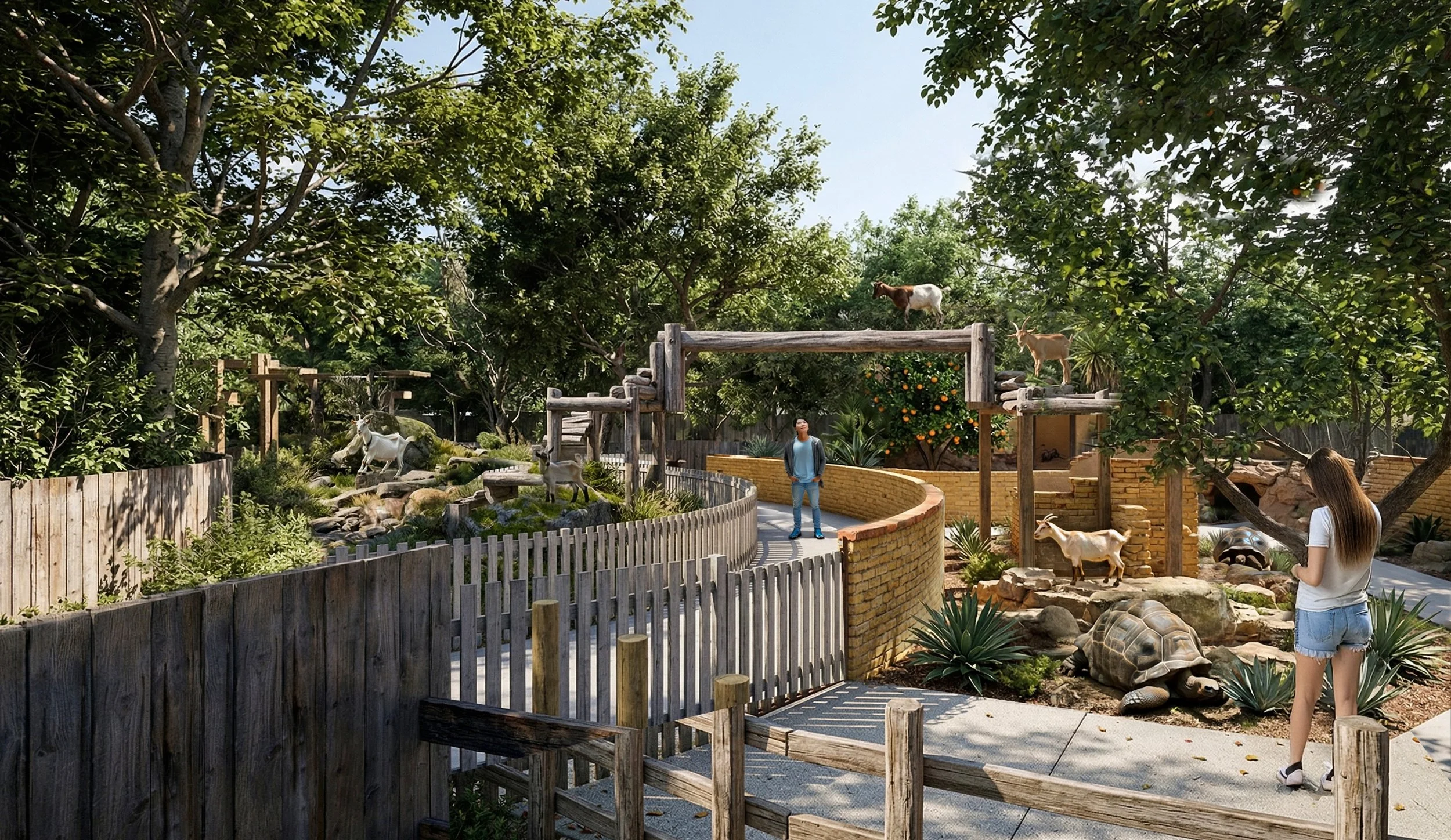
Leaving the energy of the market, visitors enter an open-air space where time overlaps. Weathered Spanish colonial walls and fort remnants stand alongside fountains, gardens, and shaded seating. Settle into the slow rhythm of a South American estancia.
Among the ruins live its true keepers—animals once brought by explorers and left behind. Meerkats, introduced as protection against venomous snakes. Tortoises, carried across oceans as sustenance. Goats, the most resilient livestock of colonial settlements. Over time, as people disappeared, these animals remained—adapting, reproducing, and ultimately claiming the land as their own.
Today, Gaucho Plaza reinterprets this layered history as a living environment. At times, it hosts animal encounters and storytelling; at others, it becomes a quiet stage for sketching, performance, and reflection. It is the emotional anchor of the park—a place where history softens into atmosphere, and life quietly takes root again.
Cabinet of Fishes
/ Naturalists of the Age of Exploration
-
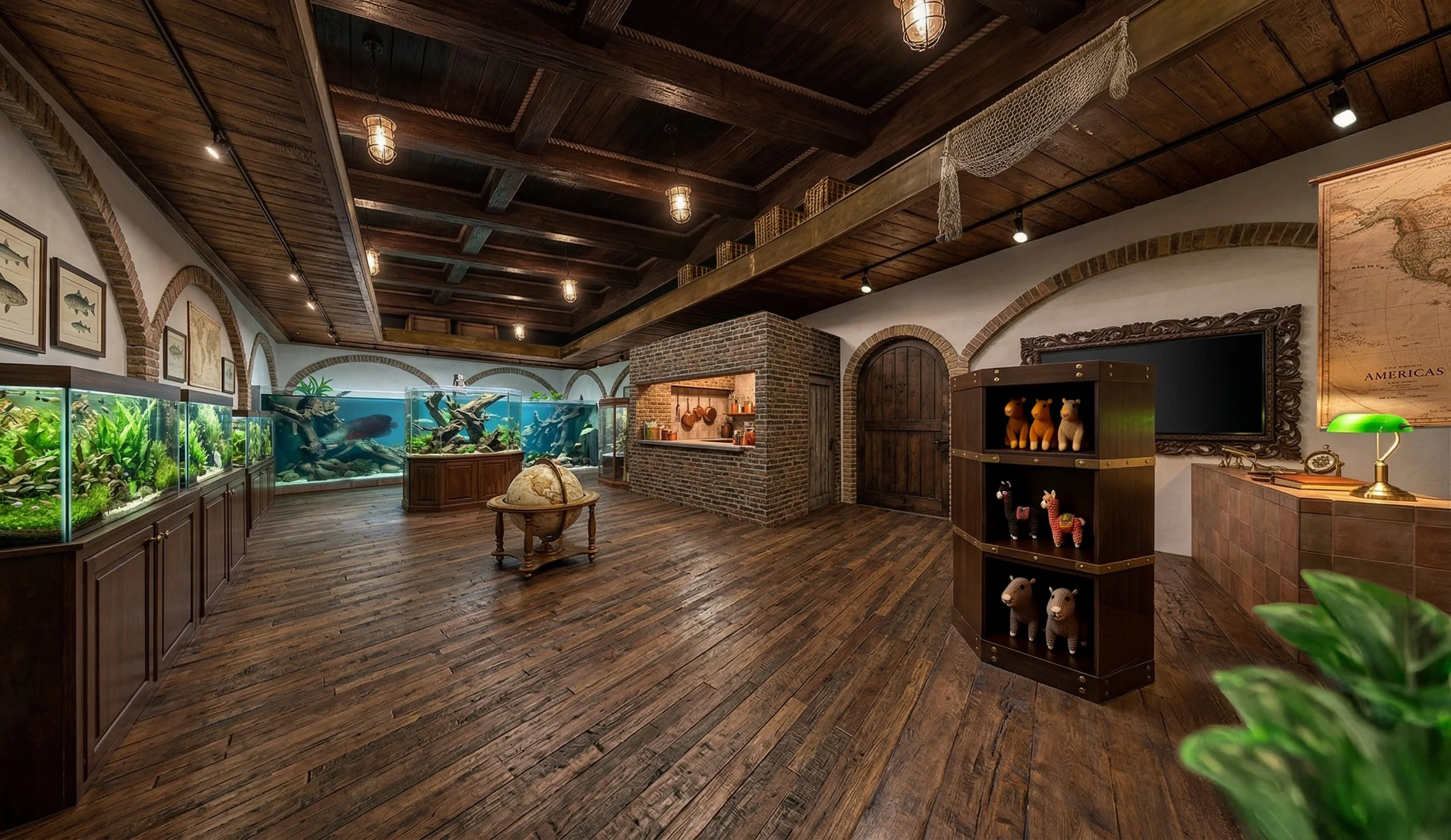
Through a heavy wooden door, visitors step into a space suspended between ruin and rediscovery. This is not a conventional aquarium, but a reimagined collector’s room from the Age of Exploration. Light filters through a partially broken roof, casting dramatic beams across aged maps and hand-drawn charts. Vines creep inward from the outside, blurring the boundary between architecture and nature.
At its core is a network of stories—five explorers, five great rivers—woven into a living map. Here, fish are not specimens, but records of discovery, each tank a fragment of the natural world as first encountered.
This space reframes the act of display. It is not only about observing aquatic life, but about revisiting a time when the world was still being measured, mapped, and imagined. Each aquarium becomes a window—inviting experts to recognize rare species, and all visitors to reconnect with the curiosity and wonder of crossing into the unknown.
Rainforest Rio
/ The Expedition Begins
-
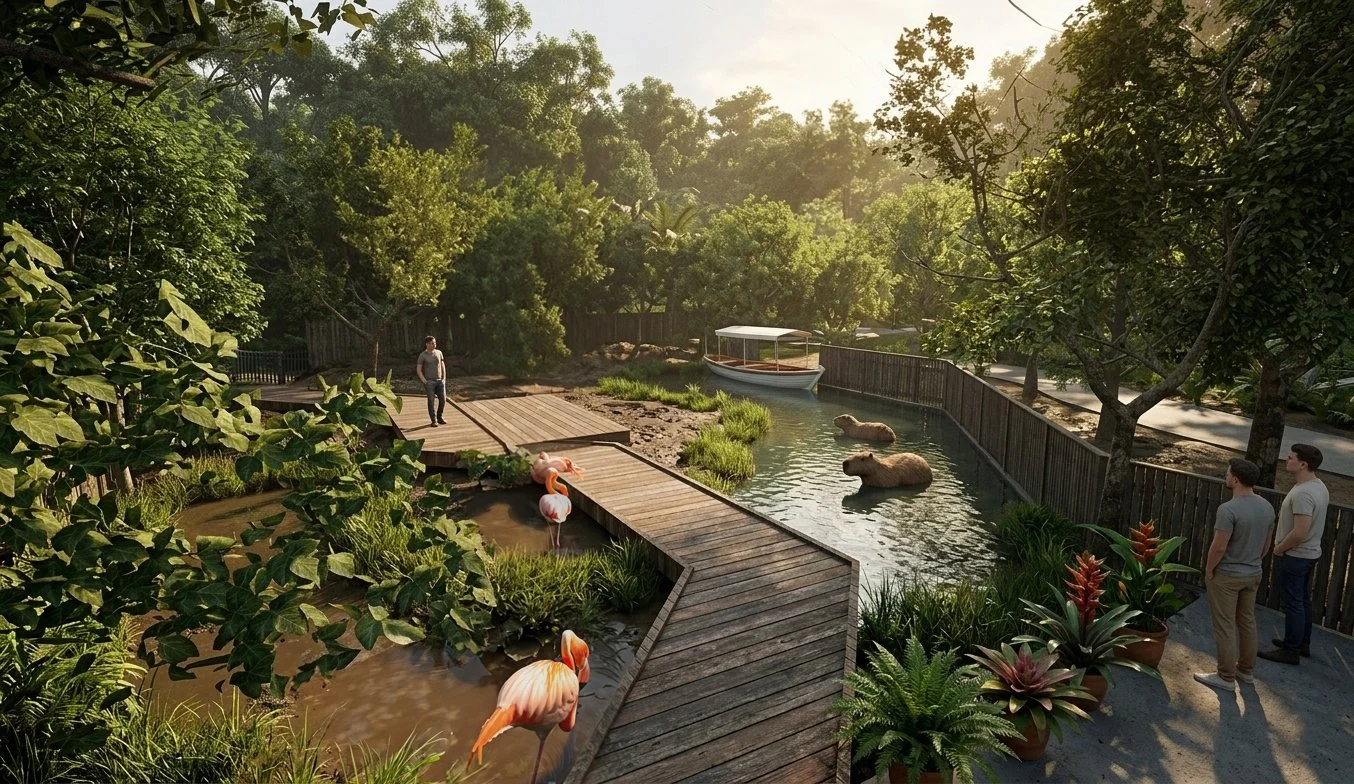
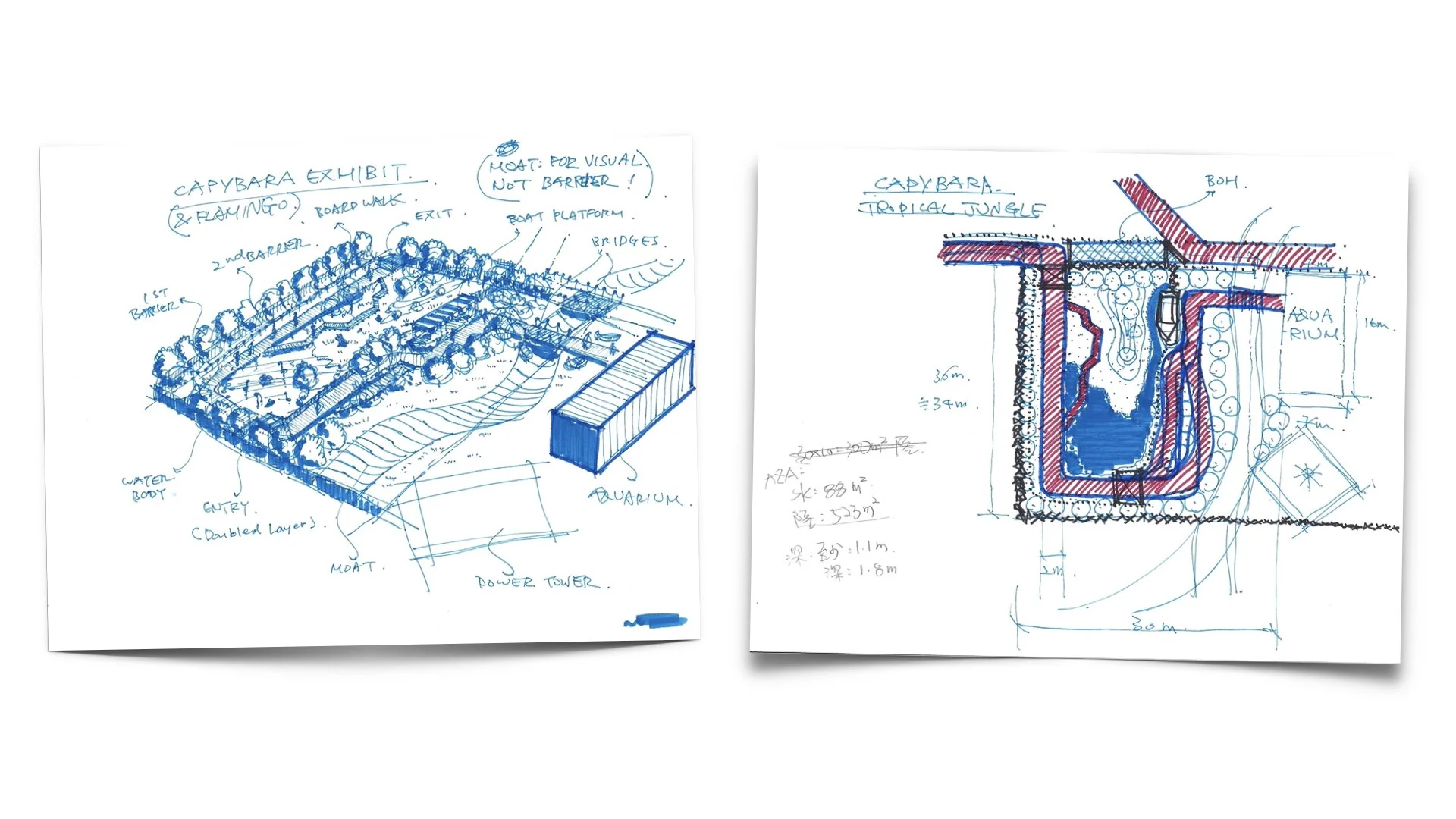
Leaving the cabinet behind, the ground softens—stone gives way to damp soil, leaves, and water. Architecture dissolves, replaced by layered greens and a flowing river system. This space recreates the riparian forests of the Pilcomayo—where explorers first stepped beyond their vessels and into the interior of a new continent.
A wooden boat rests along the riverbank, half-consumed by mud and vines—a quiet trace of upstream struggle. Here, sound shifts: water against shore, wind through broad leaves, distant calls of unseen life.
Pampas Ranch
/ Where the Journey Settles
-
Crossing the waterline, the world opens.
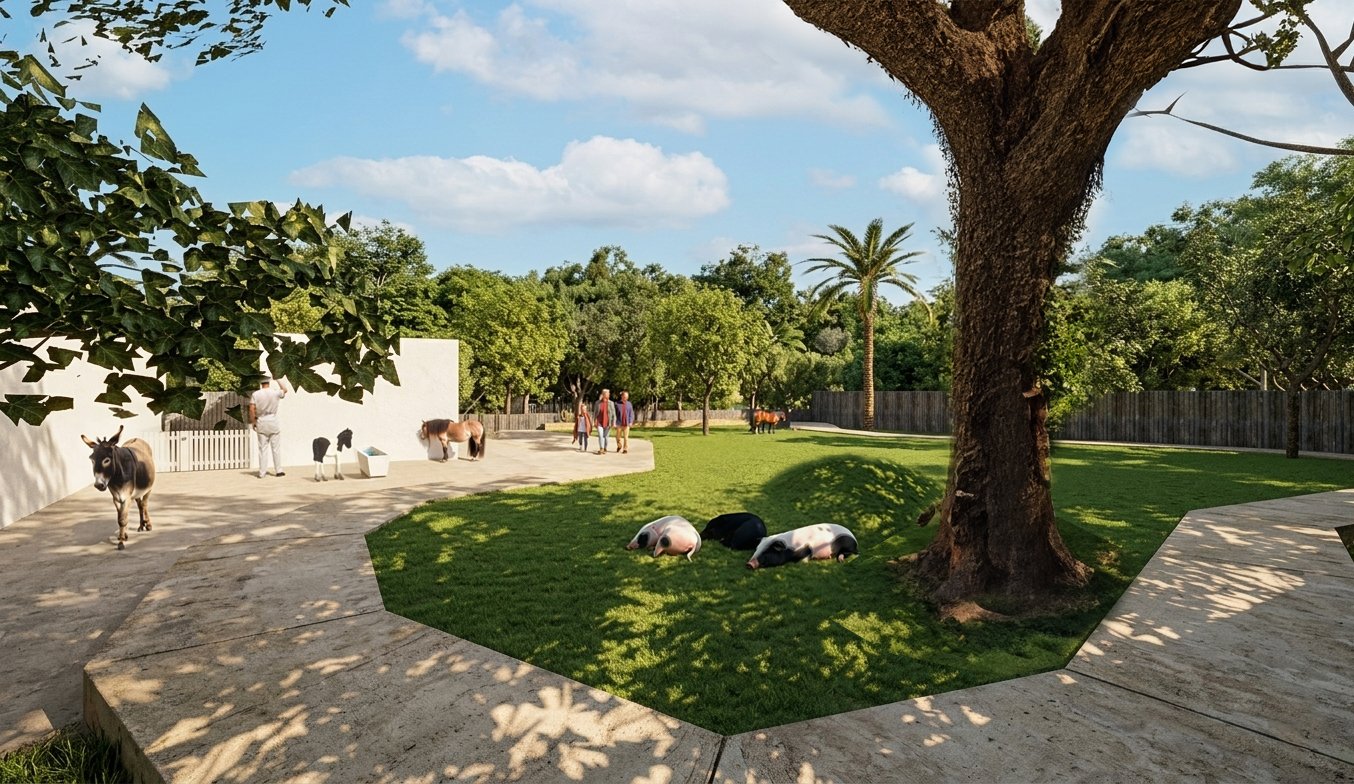
The forest recedes into an expansive grassland—sunlit, wind-shaped, and endless in scale. Wooden fences, aged stables, and subtle equestrian motifs speak not of conquest, but of arrival—of a place where movement slows and life takes root.
Here, animals are not exhibits, but residents. Horses and donkeys graze quietly; pigs rest in the shades. Their presence reflects a shift—from exploration to habitation.
The atmosphere softens. What was once tension becomes warmth. Visitors are invited not just to observe, but to linger—to walk, to breathe, to experience the rhythm of land, hay, and wind.
Patagonia Vista
/ Who Discovered Whom
-
Before ships arrived from Europe, the Andes inhabited to llamas and alpacas—animals deeply woven into indigenous life, economy, and belief. They carried goods, sustained communities, and embodied a balanced relationship with the land.
That balance was disrupted.
With the arrival of European species came the Columbian Exchange—reshaping ecosystems, economies, and cultures across the globe. What is often framed as “exchange” was, in reality, a complex collision—of species, systems, and survival.
Today, the landscape appears calm. Alpacas stand among sheep, acting as natural guardians—alert, territorial, quietly protective. This coexistence is not original, but earned—formed through centuries of adaptation and tension.
Among them, smaller lives move unnoticed—guinea pigs and cavies, neither conquerors nor symbols, but witnesses. Their quiet persistence speaks to another kind of resilience: not dominance, but endurance.
In this open vista, the journey turns reflective. What we see is not only a landscape, but the echo of history—where conflict, adaptation, and coexistence continue to shape the living world.
The Whispering Land
/ Remembering What Is Lost
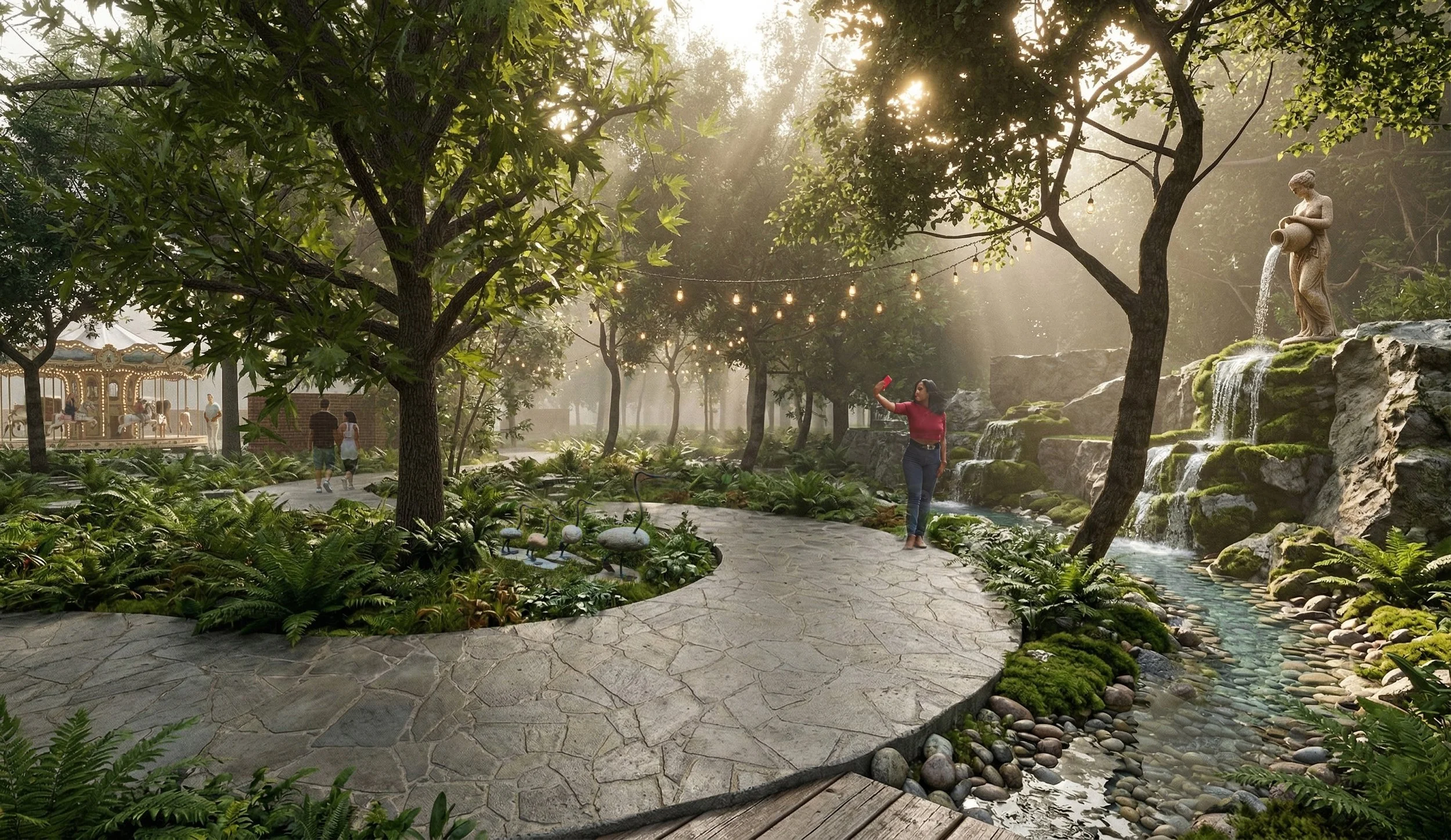
-
The journey begins to quiet.
Wind fades, the openness of the plains recedes, and visitors enter a forest suspended between reality and dream. Light softens, movement slows, and the space invites pause—a place for reflection at the edge of the experience.
Within the trees, a weathered carousel stands still—not merely an attraction, but a distilled symbol of motion, echoing the spirit of polo and the momentum of exploration.
And then, a quieter truth emerges. Tucked within the forest is a small memorial—simple, almost fragile. Names carved in stone mark species lost in the wake of exploration: the dodo, the great auk, the Carolina parakeet. This is not spectacle, but remembrance—a gentle acknowledgment that discovery and disappearance have always been intertwined.
Here, tenderness and loss coexist. As the music rises and fades, visitors move forward carrying something intangible—a memory, a weight, a quiet understanding—ready to return, changed.
Capítulo Formosa
/ Carrying Memory Home
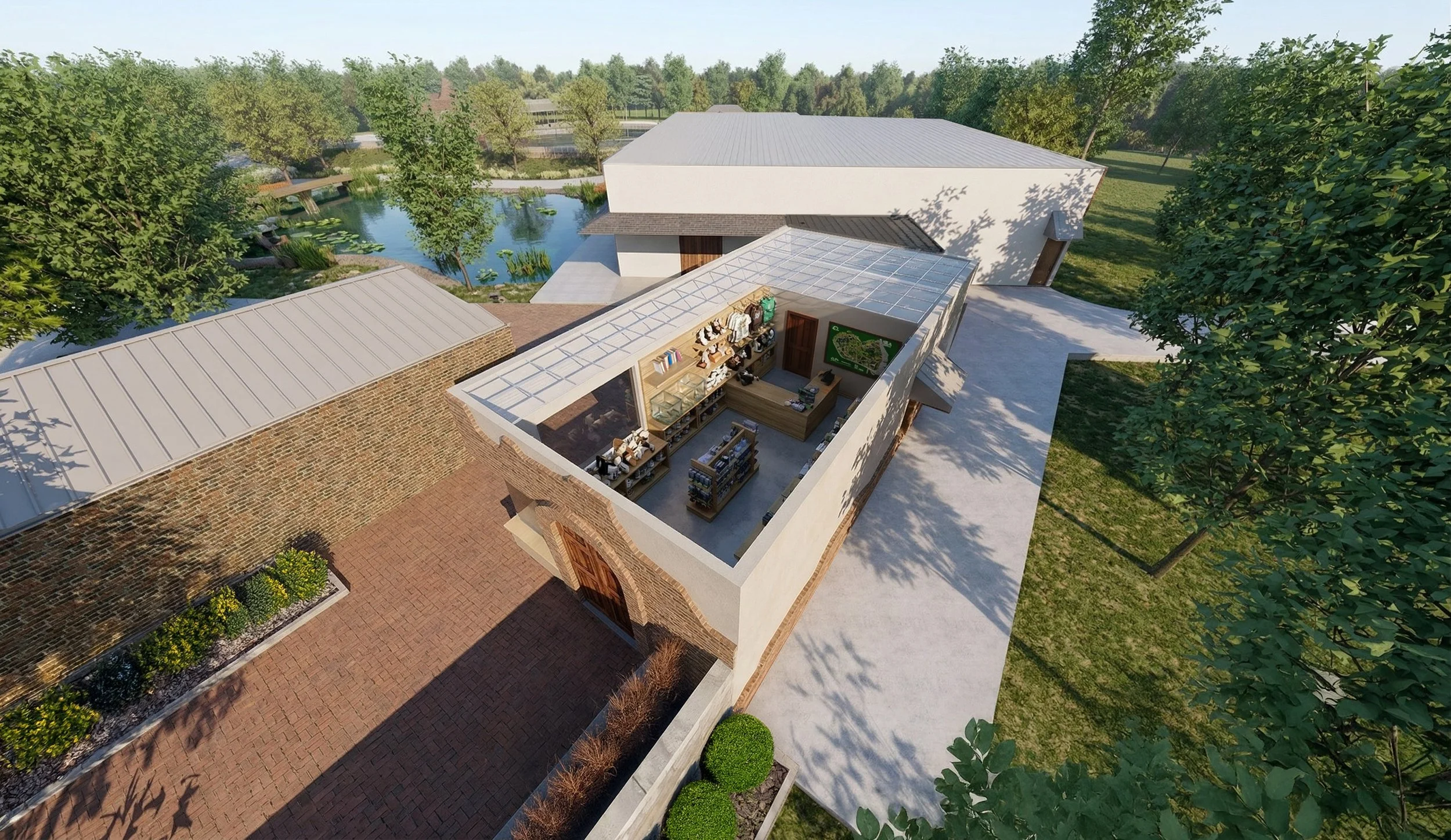
-
This is not just retail—it is the final act of the journey.
Each object becomes a fragment of experience made tangible. As visitors leave, what they carry is more than a souvenir—it is proof. Proof that the passage existed, that another Formosa was reached, and that the journey continues beyond the site itself.
What returns home is not only a memory of a distant place, but a new way of seeing one’s own.
Similar Projects
-

Formosan Area Renovation
Zoo Master Plan
-

FAIRIQUARIUM
Themed Experience
-
SEA LIFE Summer of Sharks
Themed Experience
-
Pirates of the Haunted Seas
Environmental Graphic Design